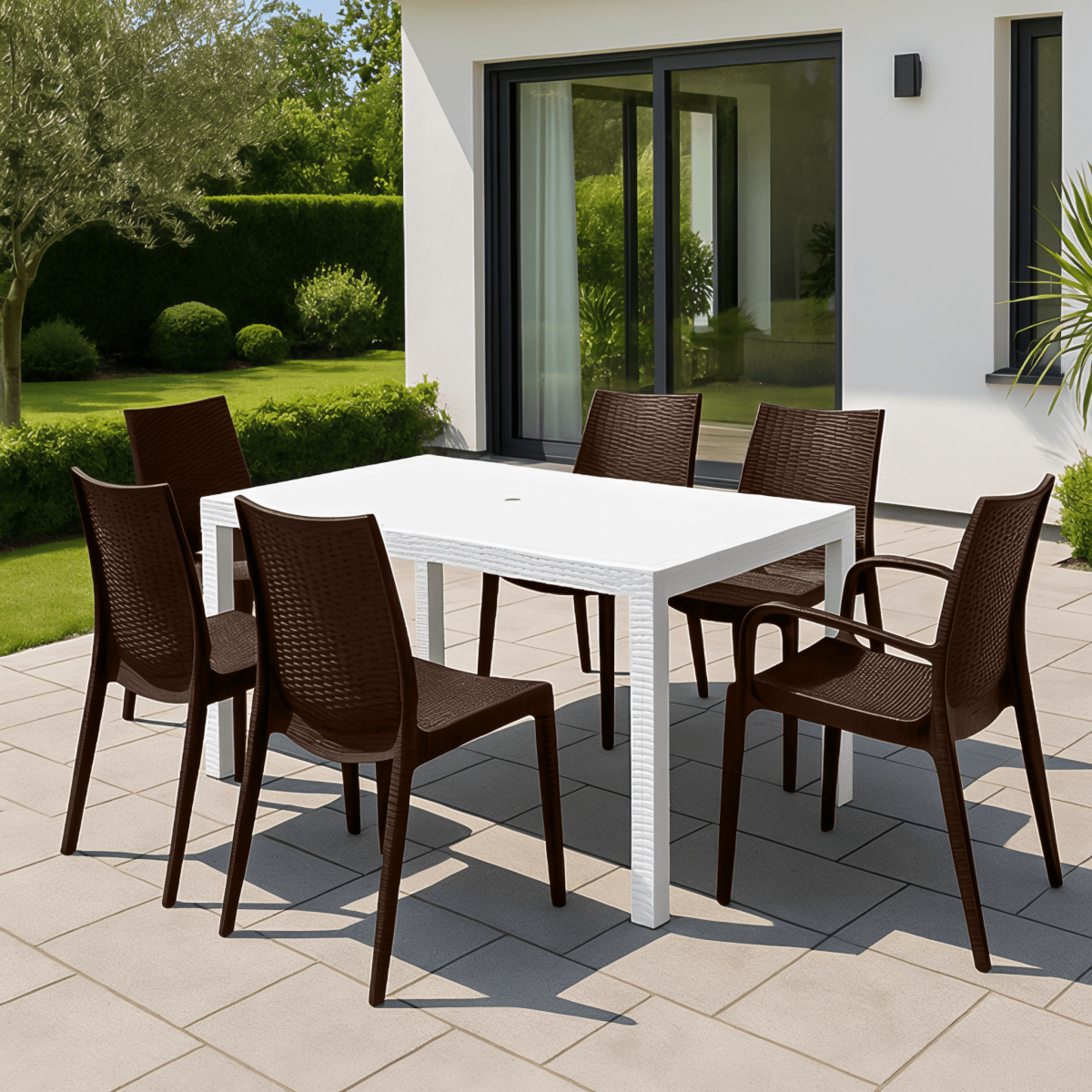



What Is a Rattan Chair?
A rattan chair is an organic, lightweight, and durable seating piece constructed using the fibrous, flexible stems of climbing palm plants (belonging to the Calamoid family, primarily the Calamus genus).
Unlike hollow bamboo, natural rattan features a solid-core vine that can be steamed, shaped, and bent into structural chair frames. The inner core (reed) and outer bark (cane) can be split into pliable strips to weave ergonomic seats, backrests, and decorative accents. In modern commercial and hospitality settings, rattan chairs are prized for blending organic aesthetic warmth with high structural resilience.
Quick Summary for Specifiers & Buyers:
Material Core: Solid climbing palm vine (flexible, non-hollow, shock-absorbent).
Standard Weight Capacity: 110 kg – 160 kg (250 – 350 lbs) for commercial-grade reinforced frames.
Primary Uses: Dining rooms, hotel lounges, boutique resort patios, cafe seating, and bohemian/minimalist interiors.
Primary Types: Natural rattan (indoor & semi-sheltered) vs. High-Density Polyethylene (HDPE) synthetic rattan (full outdoor exposure).
Rattan vs. Wicker: What Is the Difference?
One of the most common misconceptions in furniture sourcing is using the terms "rattan" and "wicker" interchangeably. Understanding the distinction is essential before specifying furniture for residential or commercial projects:
-
Rattan is a raw material: It is the biological plant vine harvested from tropical rain forests, predominantly in Southeast Asia (Indonesia, Malaysia, Philippines).
-
Wicker is a weaving technique: It is an ancient method of interlacing flexible branches, vines, reeds, or synthetic strands over a rigid structure.
| Feature | Natural Rattan Chair | Wicker Chair (Technique) |
|
Definition |
Furniture constructed from Calamus palm vines. |
Any seating made using woven interlacing techniques. |
|
Material Base |
Solid natural pole + cane bark. |
Can be rattan, willow, bamboo, paper rope, or synthetic resin. |
|
Frame Type |
Steam-bent solid rattan poles or hardwood. |
Aluminum, steel, wood, or rattan armature. |
|
Structural Feel |
Solid, firm, organic wood-grain feel. |
Flexible, tactile, woven pattern texture. |
|
Best Application |
Indoor dining, covered lounges, sunrooms. |
Depends entirely on the underlying material used. |
How Are Commercial-Grade Rattan Chairs Made?
While lower-tier retail pieces may rely on fast assembly and light staples, high-quality commercial-grade rattan chairs undergo a multi-stage artisanal manufacturing workflow:
[Harvesting Mature Stems] ➔ [Curing & Desilication] ➔ [Steam Bending & Framework] ➔ [Cane Weaving] ➔ [Sanding, Sealing & QC Testing]
-
Harvesting & Selection: Rattan vines take approximately 5 to 7 years to reach mature thickness. Harvesters cut the bottom stems, leaving roots intact to regenerate.
-
Curing & Grading: The raw vines are washed, peeled of outer thistles, and kiln-dried or oil-cured to purge moisture, preventing fungal rot and wood-boring insects.
-
Steam Bending: The solid poles are placed in pressurized steam chambers. The heat and moisture soften the lignin within the fibers, allowing craftsmen to hand-bend the poles into curved contours, cantilever loops, and structural legs over precision jigs.
-
Joinery & Binding: Frames are assembled using dowels, mortise-and-tenon joints, or pneumatic fasteners, then tightly lashed at joint junctions using damp natural cane strips (peel) that contract as they dry for a locking grip.
-
Weaving (Cane/Mesh): Hand-woven or pre-woven octagonal webbing is fitted into the seat and back cavities.
-
Protective Finishing: Chairs receive multi-coat polyurethane or clear nitrocellulose sealers to lock out surface humidity and resist UV degradation.
How Much Weight Can a Rattan Chair Hold?
A common myth is that rattan chairs are delicate and break easily under weight. In reality, rattan fibers possess an exceptional tensile-strength-to-weight ratio, which is why they have been used for heavy structural furniture since the 19th century.
-
Standard Residential Rattan Chairs: Typically rated for 100 kg to 115 kg (220 – 250 lbs).
-
Commercial-Grade Rattan Chairs (B2B Standard): Feature reinforced cross-stretchers, solid hardwood seat rings, and heavy-gauge cane webbing, safely supporting 135 kg to 160 kg (300 – 350 lbs).
-
Outdoor Aluminum-Framed Synthetic Rattan: Often tested to withstand up to 180 kg (400 lbs) for heavy-use hotel and restaurant dining patios.
Natural Rattan vs. Synthetic Rattan: Which Should You Choose?
When ordering rattan chairs in bulk for commercial spaces or high-traffic projects, choosing between natural and synthetic material depends directly on the operating environment:
| Property | Natural Rattan Chair | Synthetic (PE / HDPE) Rattan Chair |
|
Material Origin |
100% Biodegradable Tropical Vine |
High-Density Polyethylene Resin |
|
Ideal Environment |
Climate-controlled interiors, covered verandas |
Uncovered patios, poolside cafes, beach resorts |
|
Weather Resistance |
Sensitive to standing water, heavy rain, and frost |
100% waterproof; resistant to chlorine & salt spray |
|
UV Resistance |
Natural patina over time; direct sun causes drying |
Formulated with UV inhibitors (Grade 4–5 anti-fading) |
|
Maintenance |
Dusting, occasional damp cloth, lemon oil |
Hose down with soapy water, zero oiling needed |
|
Aesthetic Value |
Authentic warmth, unique grain, artisan luxury |
Modern, clean lines, uniform color tones |
Popular Styles of Rattan Chairs
-
French Bistro / Cafe Dining Chairs: Iconic woven backrests, often featuring vibrant diamond or herringbone chevron weaves mounted on bent-cane or aluminum-core frames.
-
Mid-Century Bauhaus & Cantilever Chairs: Minimalist tubular metal or beechwood frames holding natural woven cane seats (often referred to as Cesca-style seating).
-
Peacock & Bohemian Lounge Chairs: Grand, high-backed statement pieces featuring intricate spiral lattice work, ideal for hotel lobbies and photo backdrops.
-
Tub & Barrel Accent Chairs: Deep curved wrap-around frames that cradle the user, frequently paired with custom hospitality-grade upholstery cushions.
Key Benefits of Using Rattan Chairs in Commercial Projects
-
Lightweight Efficiency: Rattan chairs are significantly lighter than solid oak or cast-iron seating, allowing hospitality staff to reconfigure dining floors and banquets rapidly.
-
Biophilic Design Appeal: Modern commercial interior trends prioritize natural textures, greenery, and sustainable materials that boost customer dwell time and wellbeing.
-
Low Carbon Footprint: Because rattan is a fast-regenerating vine that grows up surrounding forest trees without requiring clear-cutting, it is one of the most environmentally sustainable furniture materials available.
-
Longevity Under Care: When maintained in sheltered environments, commercial natural rattan furniture routinely achieves a service lifespan of 10 to 15+ years.
Maintenance & Care Guidelines for High-Traffic Environments
To preserve the appearance and tensile strength of natural rattan chairs in high-traffic applications:
-
Daily Dusting: Use a soft-bristle brush, handheld vacuum with a brush nozzle, or microfiber cloth to remove dust from the woven crevices.
-
Moisture Management: Wipe spills immediately with a slightly damp cloth. Never saturate natural rattan with harsh chemicals, bleach, or steam cleaners.
-
Humidity Balance: In arid or intensely air-conditioned environments, lightly misting the underside of cane webbing with water once or twice a year keeps fibers supple and prevents brittle cracking.
Frequently Asked Questions (FAQ)
1. Can natural rattan chairs be left outside in the rain?
No. Direct rain and prolonged humidity saturate natural rattan fibers, leading to mildew, sagging cane, and joint weakening. Outdoor spaces strictly require synthetic HDPE wicker paired with powder-coated aluminum frames.
2. Is rattan the same thing as bamboo?
No. Bamboo is a hollow grass, whereas rattan is a solid-core climbing vine. Because of its solid stem, rattan can undergo steam-bending into curved, ergonomic chair shapes without splitting.
3. How much weight can a rattan chair hold?
A standard, properly constructed rattan chair safely supports 100 kg to 150 kg (220 to 330 lbs). Using a high-density foam cushion distributes body weight evenly, protecting the individual woven cane strands from localized stress.
4. What is the real difference between rattan and wicker?
Rattan is the raw material, while wicker is the weaving technique. Rattan is a botanical vine species, whereas wicker refers to the method used to weave fibers (such as cane, reed, or synthetic resin) into furniture.
5. How do you identify commercial-grade rattan chairs?
Commercial-grade chairs feature 28–32 mm thick primary poles, reinforced cross-bracing beneath the seat pan, a tight high-density cane weave, and polyurethane protective sealers engineered for high-traffic durability.
Sourcing Wholesale & Custom Rattan Chairs for Your Business
Are you an interior designer, hotelier, or furniture retailer seeking reliable bulk manufacturing of natural or synthetic rattan chairs?
-
Custom OEM/ODM Manufacturing: Custom frame dimensions, signature weave patterns, and upholstery finishes.
-
Strict Quality Control: Kiln-dried material treatment, commercial weight stress-testing, and export-grade protective packaging.
-
Wholesale Project Pricing: Tiered container pricing, flexible MOQs, and complete shipping logistics support.
Contact Our Commercial Sourcing Team Today for a Quote & Catalog Access