

1. Quick Verdict & Master Comparison Table
| Metric / Attribute | Acacia Wood (Acacia mangium / Koa) | Teak Wood (Tectona grandis) |
| Botanical Family | Fabaceae (Legume family) | Lamiaceae (Mint family) |
| Janka Hardness Rating | 1,700 – 2,250 lbf (Very hard, highly dent-resistant) | 1,000 – 1,150 lbf (Moderate hardness, dense grain) |
| Outdoor Expected Lifespan | 5 – 15 years (contingent on weather sealing) | 50 – 75+ years (practically immune to environmental rot) |
| Natural Resin Composition | Moderate water-soluble tannins; low silica | High concentrations of tectoquinone, natural rubber, & silica |
| Dimensional Stability | Moderate to Low (expands/contracts across seasons) | Extremely High (negligible shrinkage or swelling) |
| Water & Moisture Behavior | Water-resistant surface; vulnerable to waterlogged pores | Hydrophobic; cell cavities repel liquid absorption naturally |
| UV & Direct Sun Resistance | Susceptible to checking, surface cracks, and warping | UV-resistant; naturally oxidizes into a silvery-gray patina |
| Insect & Pest Deterrence | Moderate; heartwood resists termites, sapwood does not | Immune to termites, marine borers, and dry rot |
| Annual Maintenance Scope | High: Wash, sand, and re-coat with UV sealer every 6–12 months | Low: Annual surface soap wash; optional sealer for honey tone |
| Harvest Maturity Window | 10 – 15 years (Fast-growing plantation crop) | 35 – 50+ years for premium Grade-A Heartwood |
| Average Pricing Tier | $ to $$ (Accessible to mid-market) \vert{} $$$$ (Luxury architectural / investment asset) | |
| Optimal Environment | Covered decks, shaded porches, moderate humidity | Exposed pool decks, coastal zones, direct sunlight, rain |
2. In-Depth Botanical Profiles
What Exactly Is Acacia Wood?
Physical Attributes & Grain Anatomy
Structural Hardness vs. Weather Resistance
What Exactly Is Teak Wood?
Physical Attributes & Grain Anatomy
The Chemistry Behind Teak’s Superiority
-
Tectoquinone: A natural organic hydrocarbon embedded in the heartwood that acts as a natural biocide, making the timber toxic to termites, carpenter ants, and wood-boring beetles.
-
Natural Silica: The wood fibers incorporate microscopic silica minerals absorbed from volcanic tropical soils. This makes the timber impervious to water penetration and resistant to fungal decomposition.
-
Rubber Resins: Raw teak feels slightly waxy to the touch because its cellular pockets hold up to 5% natural rubber content. This internal seal keeps the wood supple and minimizes seasonal shrinkage and expansion.
3. The 3 Grades of Teak: Why Pricing Varies Dramatically
Grade-A Teak (The Gold Standard)
-
Harvest Location: Extracted from the core heartwood of mature trees (30 to 50+ years old).
-
Characteristics: Rich honey-amber hue, uniform grain alignment, completely knot-free, and saturated with natural oils.
-
Outdoor Performance: Fully resistant to rain, snow, saltwater, and direct UV rays. It lasts 50 to 100 years without rotting, even left outside year-round.
Grade-B Teak
-
Harvest Location: Extracted from the outer heartwood layers of semi-mature trees (15 to 25 years old).
-
Characteristics: Lighter shade, less uniform grain, and roughly half the natural oil concentration of Grade-A timber.
-
Outdoor Performance: Requires seasonal outdoor protective treatments to prevent surface cracking in harsh climates. Expected lifespan ranges from 20 to 35 years.
Grade-C Teak (Sapwood)
-
Harvest Location: Extracted from the soft, outer living ring (sapwood) of juvenile trees.
-
Characteristics: Pale straw/creamy color with noticeable sap lines and zero natural oil saturation.
-
Outdoor Performance: Poor. Without continuous synthetic sealing, Grade-C teak warps and rots just as quickly as standard softwoods.
4. Head-to-Head Architectural & Performance Metrics
Climate Adaptability & Thermal Stability
-
High Heat & Direct Sun: Acacia contains modest surface moisture and lower internal oil volume. When exposed to baking afternoon sun, this moisture evaporates rapidly, generating internal tension that causes checking (small splits along the grain) and warping. Teak retains its natural oils under severe heat without drying out or twisting out of true.
-
Rain, Humidity, and Monsoon Seasons: If left in pooling water, acacia’s pores absorb moisture, breeding mildew, expanding joinery, and eventually inducing dry rot. Teak's silica and rubber resins actively repel standing moisture, keeping joinery tight and stable.
-
Freezing Temperatures & Snow: Moisture trapped inside acacia freezes, expands, and splits the wood along stress lines. Teak absorbs virtually no water, meaning winter frost cycles do not crack its internal matrix.
Visual Evolution: To Age or To Preserve?
The Acacia Aging Process
The Teak Patina Transition
5. Maintenance Blueprints: Exactly How to Care for Each Wood
The Acacia Care Protocol (Twice Annually)
-
Surface Cleansing: Wash surfaces with a microfiber cloth dipped in lukewarm water and mild dish soap. Avoid harsh alkaline detergents or pressure washers, which scour out softer grain pulp.
-
Controlled Drying: Allow the furniture to dry completely in a shaded, well-ventilated space for 48 hours before applying sealants.
-
Surface Sanding: Lightly scuff the surfaces along the wood grain using 220-grit sandpaper to remove raised wood fibers or oxidation.
-
Protective Sealing: Apply a clear, exterior-grade polyurethane varnish, penetrating Tung oil, or UV-blocking marine spar varnish. Avoid heavy synthetic lacquer, which blisters and peels under seasonal temperature shifts.
-
Off-Ground Elevation: Ensure table and chair feet have nylon or rubber glides attached underneath. Acacia end-grain acts like a straw; if legs rest in damp grass or puddle water, moisture wicks upward into the joints.
The Teak Care Protocol (Once Annually)
-
Spring Washdown: Spray the furniture with a garden hose (do not use a pressure washer over 1,000 PSI). Using a soft nylon-bristle brush, scrub the wood across the grain using a solution of warm water and mild soap (or specialized teak cleaner) to dislodge surface dust, pollen, and algae.
-
Rinse and Settle: Rinse thoroughly with clean water and let dry naturally.
-
Handling Color (Your Choice):
-
For Natural Silver-Gray: Do nothing further. The wood protects itself.
-
To Maintain Honey-Gold: Apply an eco-friendly, water-based Teak Sealer.
-
-
The "Teak Oil" Warning: Never apply commercial products labeled "Teak Oil" to outdoor teak furniture. These products generally consist of petroleum distillates and linseed oil, not real teak extract. They deplete the timber’s natural resins and create a sticky surface that attracts dirt, airborne mold, and mildew spores.
6. Environmental Sustainability, Sourcing, and Lifecycle Cost
Acacia Sustainability
Teak Sustainability
20-Year Lifecycle Cost Analysis (Total Cost of Ownership)
Scenario: 6-Person Outdoor Dining Set over a 20-Year Timeline
1. Acacia Wood Setup
-
Initial Purchase Cost: $1,200 — An accessible, budget-friendly entry point.
-
Routine Maintenance (20 Years): $600 — Exterior sealers, marine spar varnish, sanding pads, and protective covers.
-
Mid-Life Replacement (Year 10): $1,400 — Re-purchasing the set due to joint loosening, weather checking, and water intrusion from prolonged outdoor exposure.
-
Total 20-Year Investment: $3,200
2. Grade-A Teak Setup
-
Initial Purchase Cost: $3,500 — Higher upfront architectural investment.
-
Routine Maintenance (20 Years): $150 — Basic annual wash with mild soapy water and a soft bristle brush (no mandatory oils or stains required).
-
Mid-Life Replacement: $0 — High internal rubber and silica content prevent rot; the set remains structurally sound for 50+ years.
-
Total 20-Year Investment: $3,650
Key Takeaways
-
Marginal Cost Gap: Over two decades, the true difference between the two choices narrows down to just $450 ($3,200 vs. $3,650).
-
Labor vs. Convenience: Acacia requires recurring sanding, drying, and chemical re-coating every 6 to 12 months; teak requires virtually zero labor beyond an occasional rinse.
-
Retained Asset Value: While acacia degrades toward disposal at the end of its cycle, teak develops a desirable silver-gray patina that holds substantial resale and aesthetic value for your property.
7. Alternative Outdoor Timbers: How They Stack Up
-
Eucalyptus: Performs closely to acacia. It offers good rot resistance and high density (~1,125 lbf Janka), but requires regular oiling to keep from drying out. A solid budget-friendly alternative.
-
Western Red Cedar: A lightweight softwood (~350 lbf Janka). It smells great, naturally repels insects, and resists rot, but dents and scratches easily under everyday family use.
-
Ipe (Brazilian Walnut): Extremely dense and heavy (~3,680 lbf Janka). Ipe resists rot and fire as well as teak, but is notoriously difficult to cut, drill, and assemble into fine furniture.
-
White Oak: Distinct from Red Oak, White Oak contains natural tyloses that plug its cellular pores, making it resistant to water decay. It performs well outdoors if sealed with an exterior finish.
8. Frequently Asked Questions (FAQ)
Is acacia wood good for outdoor furniture?
Does acacia wood rot if left outdoors?
Is acacia wood considered a hardwood or softwood?
Can you leave teak furniture outdoors in winter?
Why is teak furniture substantially more expensive than acacia?
Does acacia wood attract termites?
9. Final Decision Matrix: Which Wood Should You Buy?
Choose Acacia Wood If:
-
Your outdoor layout is a covered patio, three-season room, pergola, or screened veranda.
-
You love vibrant, swirling grain patterns with dynamic light-to-dark color variations.
-
You want high resistance against surface scratches, pet claws, and denting.
-
You prefer to keep upfront furniture costs manageable without choosing synthetic plastics or metals.
-
You are comfortable washing, lightly sanding, and re-sealing the wood every year.
Choose Grade-A Teak Wood If:
-
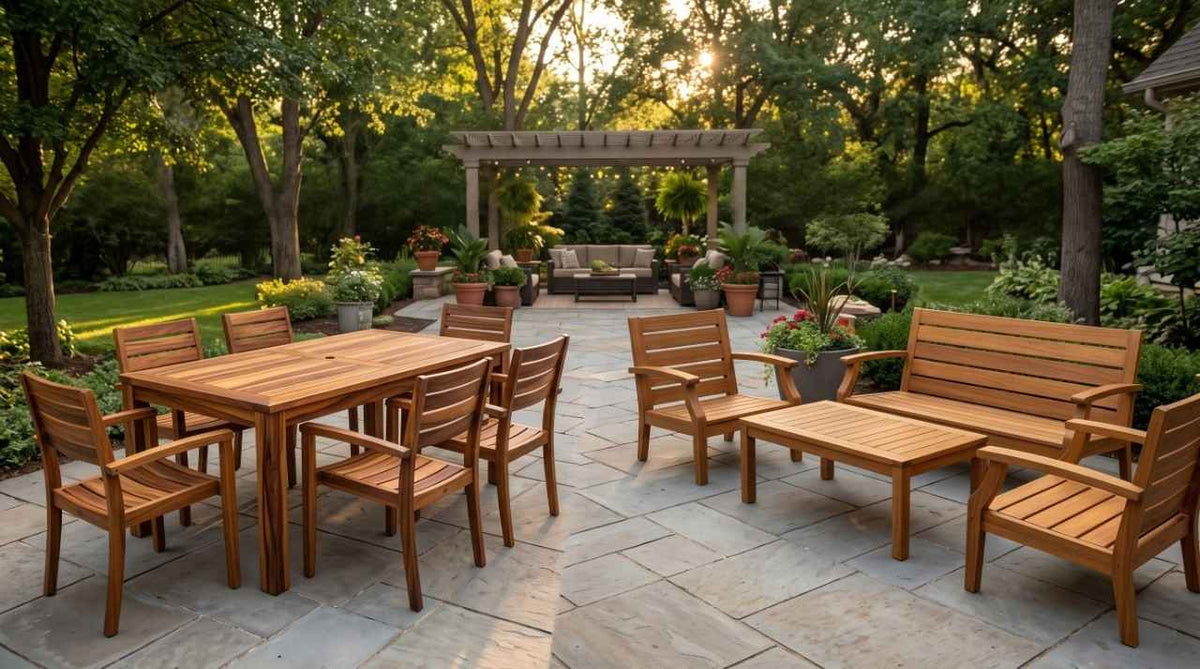
Your furniture will sit fully exposed to rain, snow, and direct sunlight on an open deck, poolside patio, or seaside dock.
-
You are looking for a true "buy-it-for-life" heirloom piece that lasts 50+ years.
-
You appreciate the natural, silver-gray patina that develops over time.
-
You prefer low-maintenance furniture that only requires an occasional wash with soapy water.
-
Your budget allows for an upfront investment in premium architectural timber.