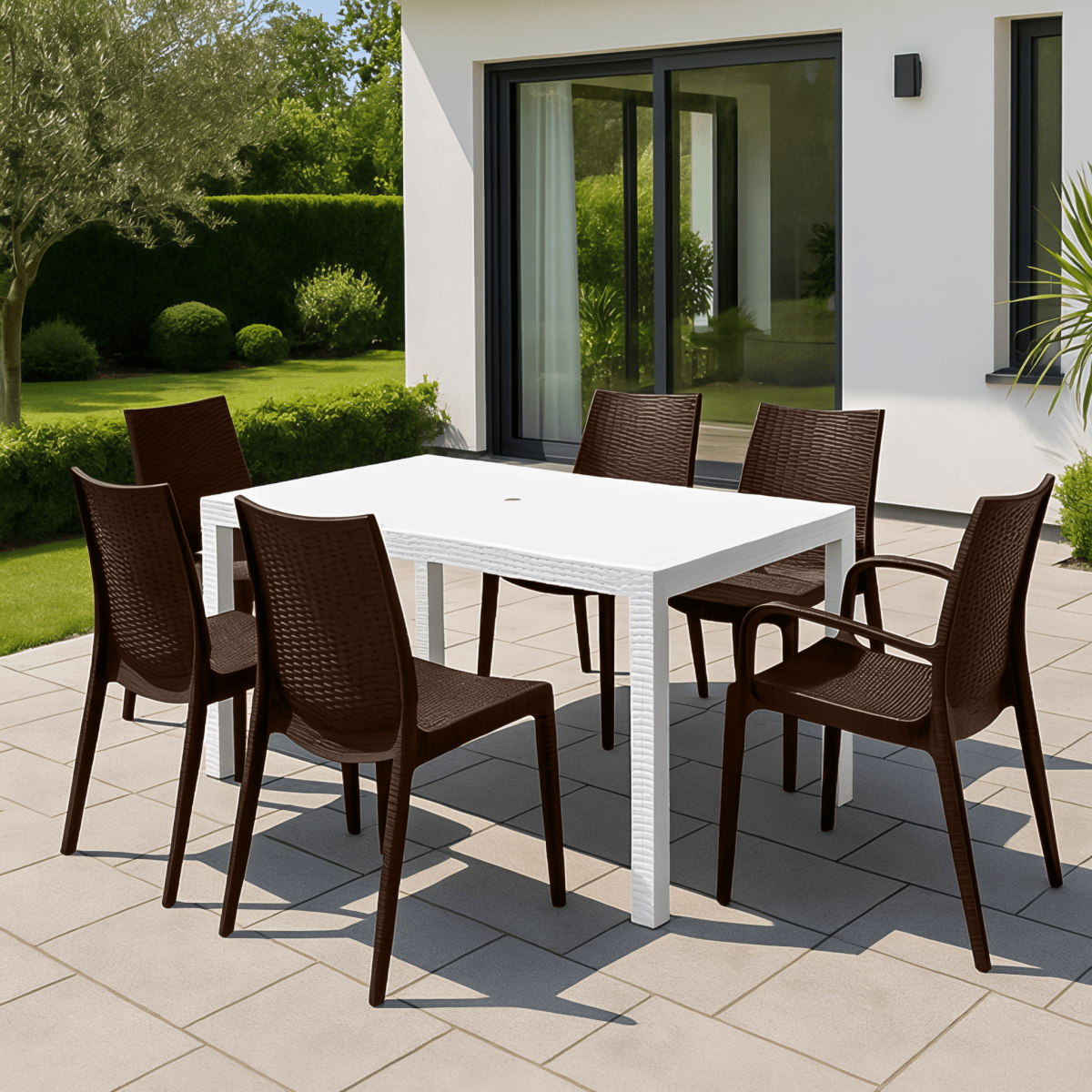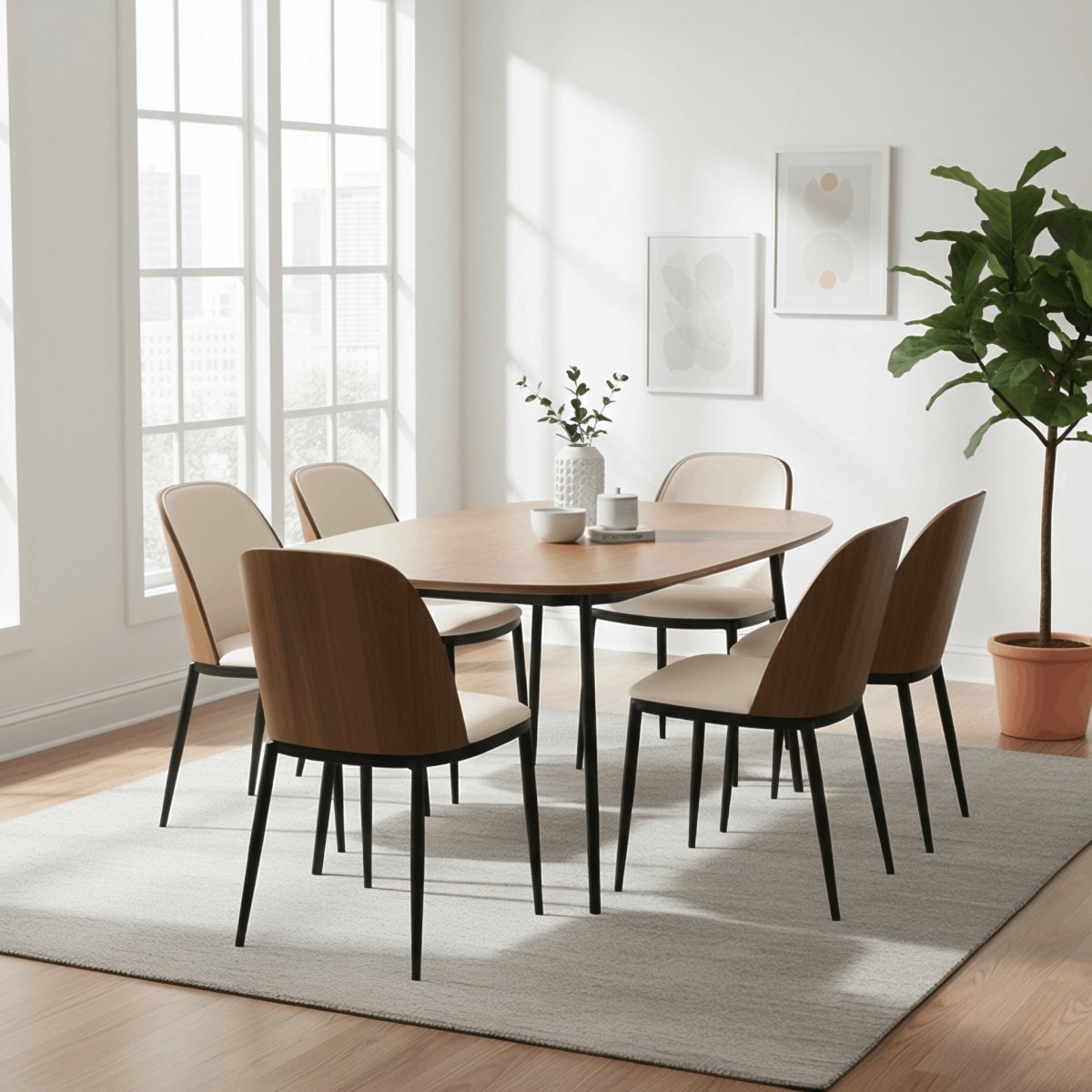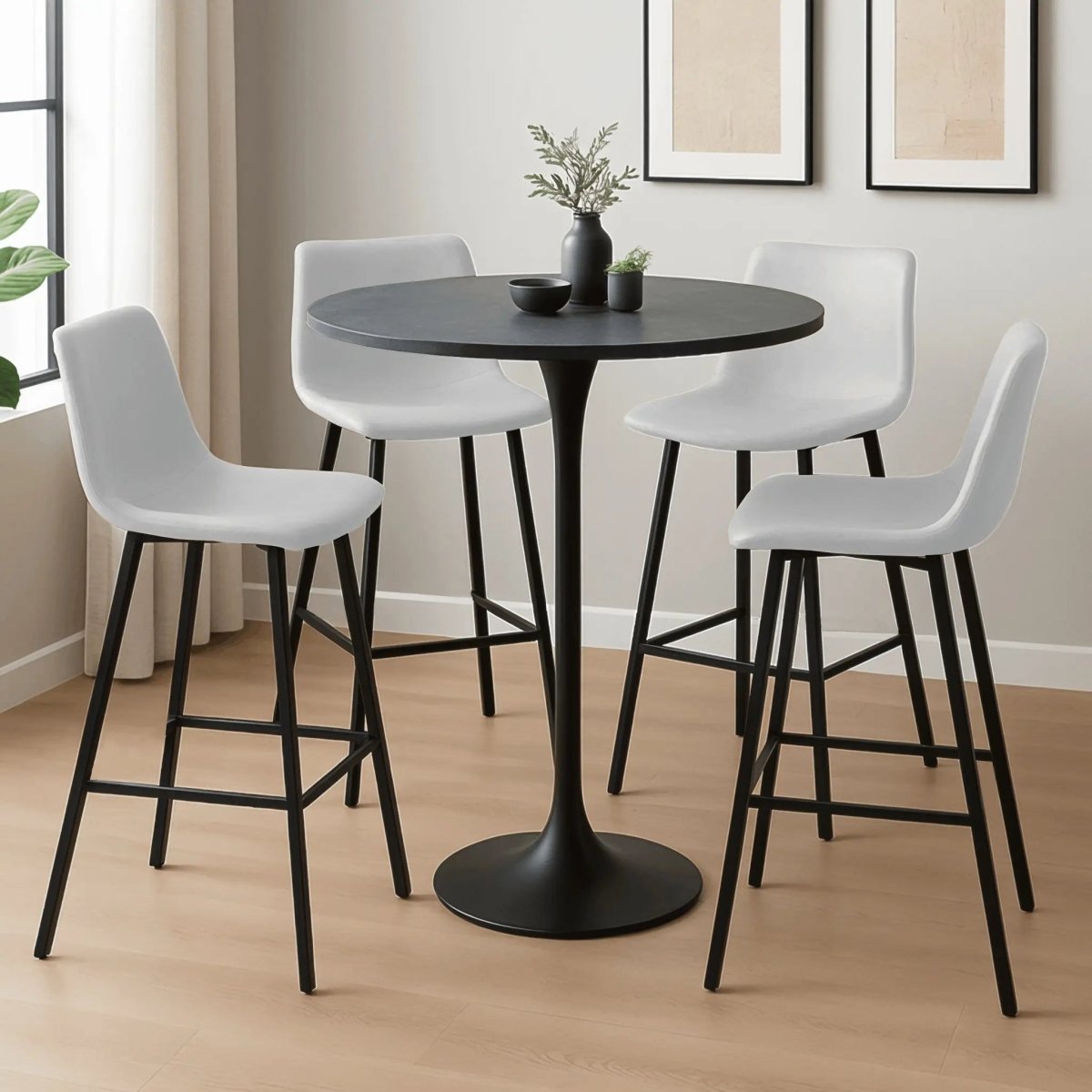

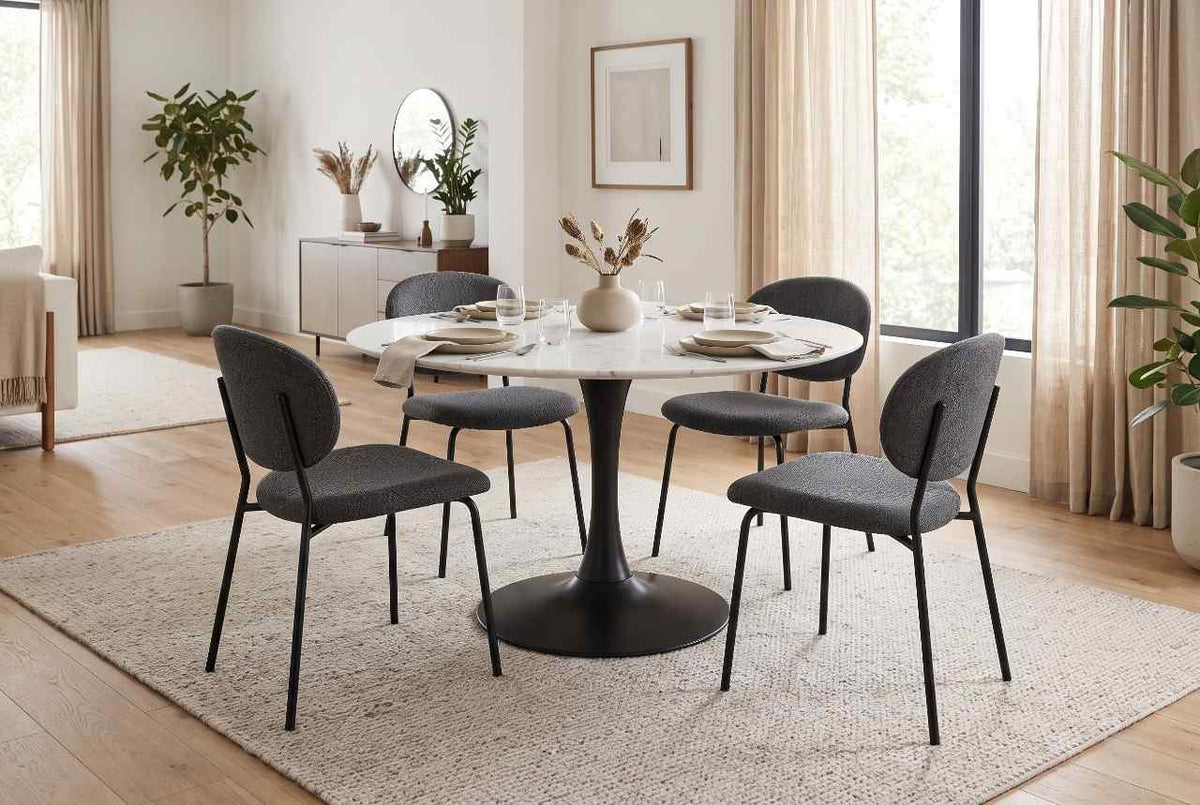

Round dining tables offer an unmatched conversational flow. Free from rigid corners, a circular silhouette fosters intimate dinners, egalitarian seating, and smooth organic movement through an open-concept dining room. However, pairing chairs with a circular table presents unique spatial and geometric challenges. Unlike rectangular surfaces where chairs tuck neatly along straight parallel lines, circular tables taper toward a central apex, restricting interior leg clearance and perimeter arc width.
At LeisureMod, we blend mid-century design heritage with contemporary ergonomic engineering. Whether you are furnishing a sunlit high-rise dining zone in New York, an urban apartment in Jersey City, or a modern suburban dining room, this comprehensive guide delivers the formulas, clearance parameters, material specifications, and design styling necessary to select the perfect dining chairs for any round dining table.
1. The Geometry of the Arc: Calculating Chair Capacity by Diameter
The most common mistake when pairing seating with a round table is treating the circumference like a straight perimeter line. Because dining chairs taper inward as they slide under a circular tabletop, both the chair's outer footprint and its backrest arc determine how many seats fit comfortably.
To preserve personal comfort during formal dinners or festive family gatherings, every guest requires a minimum arc width of 24 inches (61 cm) along the perimeter. For spacious, luxurious dining experiences, aim for 28 to 30 inches (71 to 76 cm) per person.
Chair Capacity Formula by Table Diameter:
-
36-inch (90 cm) Table: Comfortably accommodates 2 to 3 chairs. Ideal for intimate breakfast nooks or compact balcony setups.
-
42 to 48-inch (105 to 120 cm) Table: Comfortably seats 4 chairs. This is the standard residential footprint for four-person daily dining.
-
54-inch (137 cm) Table: Comfortably seats 5 to 6 chairs using streamlined, armless profiles.
-
60-inch (152 cm) Table: Comfortably seats 6 to 8 chairs. Standard for full-scale dinner parties and larger households.
-
72-inch (183 cm) Table: Seats 8 to 10 chairs, providing expansive luxury without overcrowding.
2. Essential Ergonomic Clearances: Height, Apron, and Walkways
Selecting chairs involves three critical vertical and horizontal dimensions. Overlooking even two inches can result in bruised thighs or chairs that cannot tuck underneath the tabletop.
Vertical Clearance Hierarchy
-
Floor Level to Chair Seat (Seat Height): 18 to 19 inches (45–48 cm) — Standard ergonomic elevation for comfortable knee alignment with feet flat on the floor.
-
Chair Seat to Table Underside (Thigh Clearance): 10 to 12 inches (25–30 cm) — Necessary vertical space for uninhibited leg movement, crossing legs, and sliding chairs inward smoothly.
-
Floor Level to Tabletop (Table Height): 29 to 30 inches (74–76 cm) — Universal standard height for residential dining surfaces.
Caution with Aprons: If your round table features a thick wooden structural apron or drop-leaf mechanism underneath the top, measure the vertical clearance from the bottom edge of the apron, not the tabletop surface.
Horizontal Clearances
-
Perimeter Pull-Out Clearance (36 to 42 Inches): Measure the distance from the table edge to the nearest dining room wall, buffet sideboard, or doorway. You need at least 36 inches (91 cm) of unobstructed clearance to push a chair back and stand up effortlessly. For primary transit paths, expand this to 42 to 48 inches (106 to 122 cm) to prevent bottlenecks when entertaining.
-
Lateral Elbow Clearance (6 to 8 Inches Between Chairs): When all chairs are pulled in around the table perimeter, there must be at least 6 to 8 inches (15 to 20 cm) of lateral space between adjacent chair frames. If the chair backs touch or overlap when tucked in, the dining space will appear visually cluttered, and guests will bump elbows during meals.
3. Armchairs vs. Armless Dining Chairs for Circular Profiles
One of the most consequential decisions when curating your dining space is choosing between armless side chairs and carver armchairs.
Armless Dining Chairs (The Spatial Maximizer)
Armless chairs are the undisputed champions of round dining tables. Because a circular perimeter curves away from the user, armless profiles:
-
Slide completely under the tabletop when not in use, maximizing open circulation space.
-
Permit flexible seating; an extra guest can squeeze in easily during festive gatherings or family reunions.
-
Preserve sightlines across the dining room, making compact urban rooms feel airy and open.
Armchairs and Tub Chairs (The Statement Anchor)
Dining chairs with arms provide superior ergonomic comfort, encouraging long conversations over coffee or dessert. However, they demand strict spatial allowances:
-
Arm Height Verification: Ensure the armchair's armrests sit at least 1.5 inches (4 cm) below the table apron so they can tuck under the tabletop. If they hit the edge, the chair will permanently protrude 10 to 15 inches into the room.
-
Reduced Seat Count: Armchairs generally increase chair width from 18–20 inches to 23–26 inches. On a 60-inch round table, switching from armless chairs to armchairs reduces capacity from 8 guests down to 6.
4. Table Base Dynamics: Pedestal vs. 4-Leg Round Tables
The base architecture of your round table dictates chair placement, balance, and legroom:
-
Central Pedestal Base: Offers 360° unobstructed seating freedom. Because there are no perimeter legs, chairs can slide inward at any position along the arc without awkward straddling. This makes pedestal and tulip tables the most flexible choice for fluctuating guest counts.
-
Four-Leg Base: Creates fixed 90° quadrants. Each seating position is constrained between two perimeter table legs, limiting capacity to strictly 1 chair per quadrant on tables under 60 inches. Attempting to fit 5 or 6 chairs around a 48-inch 4-leg table forces diners to straddle table legs awkwardly.
5. Climatic Resilience & Material Specifications for USA Urban Homes
When selecting dining chairs in regions with high ambient heat, seasonal monsoon humidity, and urban airborne dust—such as New York, New Jersey, Vegas, and Washington—material durability is paramount.
1. Resilient Molded Shells & Polypropylene
High-grade, UV-stabilized polypropylene chairs (such as LeisureMod’s mid-century molded shell and bucket series) offer exceptional performance. They resist thermal expansion during dry Las Vegas summers, will not absorb East Coast coastal humidity, and can be easily wiped clean of everyday food spills, oils, and surface dust
2. High-Rub Performance Velvet & Performance Linen
If you prefer upholstered luxury:
-
Ensure textiles have a Martindale rub count exceeding 25,000 cycles.
-
Look for hydrophobic, stain-resistant coatings that prevent liquid absorption.
-
Opt for breathable performance weaves over unventilated bonded faux leather, which becomes sticky in non-air-conditioned dining rooms during dry or humid heat.
3. Electrostatic Powder-Coated Metal & Seasoned Hardwood
-
Metal Bases: Choose industrial-grade matte powder-coated steel or aluminum. Unlike cheap electroplated chrome that pits and rusts in humid air, powder-coated finishes create an airtight, anti-corrosive shield.
-
Timber: Ensure wooden frames use kiln-dried, seasoned hardwoods (such as Teak, Oak, or Ash) treated against wood rot and termite infestation.
6. Master Sizing & Pairing Matrix
The following specification table provides clear sizing formulas to match round tables with LeisureMod seating profiles:
| Table Diameter | Table Circumference | Max Recommended Chairs (Armless) | Max Recommended Chairs (With Arms) | Ideal Chair Width | Recommended LeisureMod Aesthetic |
| 36 in (90 cm) | ~113 in (287 cm) | 2 to 3 Chairs | 2 Chairs | 17" – 19" (43–48 cm) | Molded Plastic Eiffel Side Chairs |
| 42 in (105 cm) | ~132 in (335 cm) | 4 Chairs | 3 Chairs | 18" – 20" (45–51 cm) | Mid-Century Wire Chairs with Seat Pads |
| 48 in (120 cm) | ~151 in (383 cm) | 4 to 5 Chairs | 4 Chairs | 18" – 21" (45–53 cm) | Minimalist Curved Wooden Spindle Chairs |
| 54 in (137 cm) | ~170 in (432 cm) | 5 to 6 Chairs | 4 to 5 Chairs | 19" – 22" (48–56 cm) | Swivel Bucket Chairs / Sculptural Fabric |
| 60 in (152 cm) | ~188 in (478 cm) | 6 to 8 Chairs | 6 Chairs | 20" – 24" (51–61 cm) | Modern Velvet Dining Armchairs |
| 72 in (183 cm) | ~226 in (574 cm) | 8 to 10 Chairs | 8 Chairs | 21" – 25" (53–64 cm) | High-Back Architectural Executive Chairs |
7. Curated Design Aesthetics: Styling Round Tables with LeisureMod
To achieve an interior designer aesthetic, match your round table with complementary chair silhouettes:
The Mid-Century Modern Tulip Pairing
-
Table: White or Carrara marble circular pedestal table.
-
Chairs: LeisureMod molded fiberglass or polypropylene swivel armchairs with contrasting seat cushions (mustard yellow, teal, or charcoal). The organic pedestal of the table mirrors the curved lines of the chairs.
The Warm Industrial Loft
-
Table: Solid reclaimed teak or rustic oak circular top with a black matte starburst metal base.
-
Chairs: LeisureMod black powder-coated wire side chairs paired with cognac faux-leather seat pads. The open grid design lets light filter through, preventing the dining area from looking visually heavy.
The Contemporary Luxe Apartment
-
Table: Fluted cylindrical wooden base with an engineered stone top.
-
Chairs: Curved, barrel-back dining chairs upholstered in stain-resistant performance velvet with brushed brass leg tips. The rounded backrests echo the table's circular shape, creating a cohesive visual retreat.
8. Frequently Asked Questions
How many chairs fit around a 4-foot (48-inch) round dining table in an NJ apartment?
A 48-inch (4-foot) round table comfortably accommodates 4 standard dining chairs with 18 to 20-inch widths, leaving 24 inches of personal perimeter room per person.
Should I choose armchairs or armless chairs for a round table in a compact dining space?
Choose armless dining chairs. They tuck completely beneath the tabletop when not in use, preserving a clear 36-inch walkway around the dining room.
How do I prevent wooden dining chairs from warping during dry indoor winter heating and humid US summers?
Select dining chairs crafted from kiln-dried hardwoods with a certified moisture content between 6% and 8%, sealed with a multi-coat polyurethane or catalyzed conversion varnish finish. During winter, maintain indoor relative humidity between 35% and 45% using a humidifier, and position chairs at least 3 feet away from direct heat registers, radiators, and sun-drenched windows.
Which dining chair material is easiest to maintain against fine dust and spicy food spills?
UV-stabilized molded polypropylene or performance fabrics with hydrophobic stain-guard coatings are easiest to maintain; they resist oil stains and can be wiped clean with soapy water.
Can I mix and match different chair styles around a round dining table?
Yes, but maintain uniform seat heights (18–19 inches) across all chairs and balance the design symmetrically (for example, two accent armchairs facing each other paired with identical side chairs).
What is the ideal clearance behind dining chairs next to an apartment wall or glass balcony sliding door?
Maintain at least 36 inches (90 cm) of clearance from the edge of the table to the wall or glass slider so guests can comfortably stand up and walk behind seated diners.
Elevate Your Dining Space with LeisureMod
Selecting dining chairs for a round table comes down to combining precise spatial math with timeless architectural silhouettes. By balancing table diameter, leg clearance, seat height, and regional climate needs, your dining space becomes an inviting center for family meals and memorable entertaining.
Explore the complete LeisureMod Dining Collection to discover ergonomically engineered, mid-century modern, and contemporary seating designed to bring enduring comfort to your dining room.