

Living with pets brings endless companionship, but it also turns your living room sofa into a magnet for shed fur. If you find yourself vacuuming your couch only to discover that coarse dog hair or fine cat fur is still trapped inside the cushions, you are dealing with a common physical challenge: pet hair naturally hooks into upholstery weaves while static electricity holds it in place.
Standard vacuum suction alone rarely removes embedded fur. Individual strands have microscopic barbs that physically lock around fabric threads, while synthetic upholstery generates negative electrostatic charges that pull hair tight against the cushion.
Quick Answer: The 5-Minute Emergency Pet Hair Removal Method
When guests are on the way and you need fur off your fabric sofa fast:
-
Neutralize Static: Mist cushions lightly from 12 inches away using a spray bottle filled with water and a few drops of fabric softener (never soak the cushions).
-
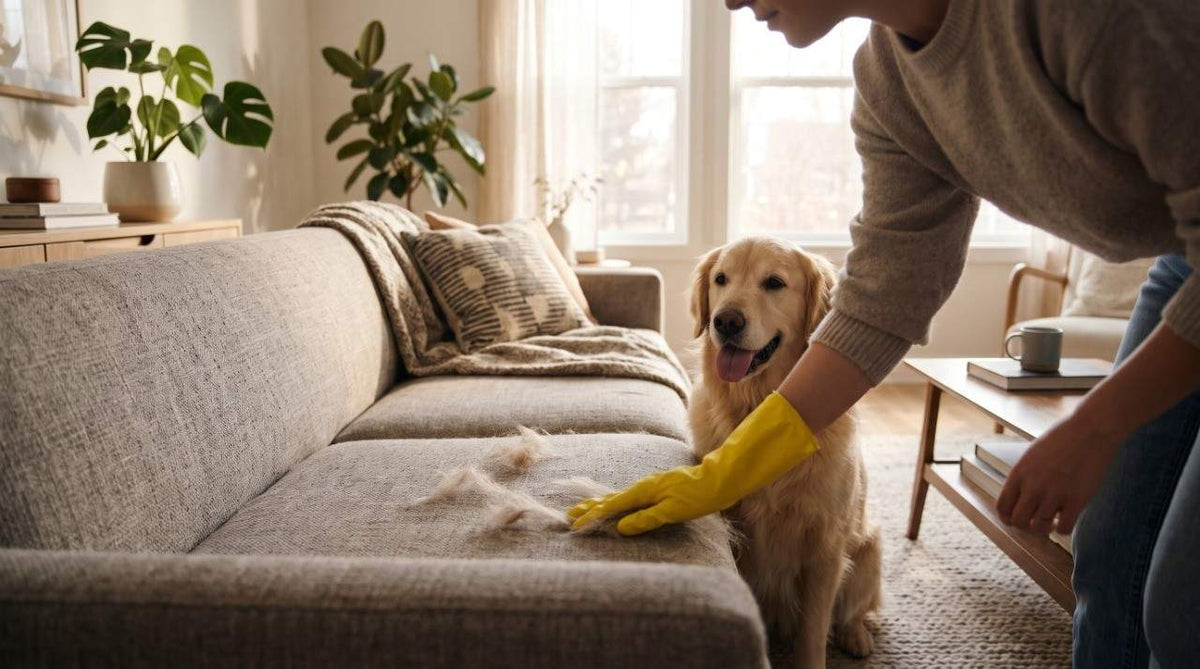
Scrape with Friction: Put on clean, textured yellow rubber dishwashing gloves. Drag your palms firmly downward in straight, overlapping lines.
-
Roll & Collect: Natural latex friction gathers deep-seated fur into dense clumps in seconds. Pick them up by hand or lift the loosened piles with a wide strip of packing tape.
Comparison of the Top Pet Hair Removal Methods
| Cleaning Method | Best Fabric Types | Speed | Effectiveness on Deep Fur | Tool Cost |
| Damp Rubber Glove | Microfiber, Polyester, Linen | Fast (3–5 min) | High | Under $3 |
| Window Squeegee | Tweed, Textured Woven, Chenille | Fast (5 min) | Maximum | Under $8 |
| ChomChom Roller | Microfiber, Cotton, Heavy Knits | Ultra-fast (2 min) | High | $20–$25 |
| Pumice Stone / Fur Lifter | Heavy Tweed, Industrial Wovens | Moderate (8–10 min) | Extreme | Under $10 |
| DIY Anti-Static Spray | All water-safe (W/WS) fabrics |
Fast (prep step) | Moderate | Under $2 |
| Motorized Pet Vacuum Tool | Cushion seams, Tufting, Mattresses | Moderate (10 min) | High | $30–$80 |
| Packing Tape Hand Wrap | Flat weaves, Throw pillows | Moderate (5 min) | Low (Surface only) | Under $4 |
| Damp Cellulose Sponge | Corduroy, Piping edges, Seams | Moderate (5 min) | Moderate | Under $2 |
| Dryer Sheet Method | Velvet, Delicate Synthetics | Fast (2 min) | Low–Moderate | Under $3 |
| Dry Microfiber Cloth | Genuine Leather, Faux Leather | Fast (3 min) | High (on flat surfaces) | Under $5 |
10 Field-Tested Methods to Remove Dog and Cat Hair from a Couch
1. The Damp Rubber Dishwashing Glove Technique
-
Best for: Microfiber, microsuede, polyester blends, and tight weaves.
-
How It Works: Put on standard yellow kitchen gloves, dampen them lightly under tap water, and shake off excess moisture. Wipe across cushions in steady, downward strokes. The textured latex creates strong electrostatic friction, rolling embedded fur into clean clumps that lift off instantly.
2. The Window Squeegee Scrape
-
Best for: Tweed, wool blends, chenille, and textured fabric sofas.
-
How It Works: Take a simple handheld window squeegee with a flexible rubber edge. Hold the blade at a 45-degree angle and pull downward in short, firm strokes. The rubber edge flexes into fabric crevices, raking up hair that vacuum suction leaves behind.
3. The Electrostatic Roller (ChomChom Roller)
-
Best for: Fast, daily maintenance on family sectionals.
-
How It Works: Roll the device back and forth rapidly over the cushion surface. The motion charges twin nylon-velvet strips, trapping fur inside an internal collection chamber without needing sticky tape refills or batteries.
4. The Grooming Pumice Stone
-
Best for: Heavy-duty, industrial-strength woven upholstery and car interiors.
-
How It Works: Lightly sweep a dry pumice stone flat against coarse fabric. The micro-abrasive surface grips stubborn, needle-like dog hairs and extracts them from deep within the yarn. (Caution: Avoid using on delicate knits, silk, or velvet).
5. DIY Anti-Static Fabric Softener Mist
-
Best for: Breaking static cling on fine cat hair before vacuuming.
-
How It Works: Mix 2 cups of warm water with 1 tablespoon of liquid fabric softener in a spray bottle. Lightly mist the couch from 12 inches away and wait 2 minutes. The conditioner neutralizes static cling and softens fibers, making subsequent vacuuming significantly faster.
6. Packing Tape Hand Wrap
-
Best for: Fast touch-ups on throw pillows, armrests, and decorative piping.
-
How It Works: Wrap wide packing tape or painter's tape around your fingers with the sticky side facing outward. Firmly pat across seams and curved contours. The strong adhesive lifts loose surface fur without snagging fabric loops.
7. The Damp Cellulose Kitchen Sponge
-
Best for: Deep button tufting, seam lines, and corner crevices.
-
How It Works: Take a clean kitchen sponge, dampen it, and wring it out completely. Rub using the coarse cellulose side in straight lines along seams. Fur naturally gathers against the sponge's textured pores.
8. Dry Microfiber Cloth Buffing
-
Best for: Genuine leather, faux leather, and smooth vinyl.
-
How It Works: Fold a plush microfiber cloth and wipe across smooth cushions. Because leather is non-porous, hair rests loose on the top surface. The split synthetic fibers grab fur and dust without leaving scratches.
9. Motorized Handheld Pet-Hair Vacuum Attachment
-
Best for: Deep allergen removal, dander extraction, and cushion sanitation.
-
How It Works: Attach a motorized mini brush head equipped with anti-tangle rubber fins to your vacuum. Glide slowly in an overlapping grid across cushions to agitate fibers and extract hidden dander from deep inside the padding.
10. The Unused Dryer Sheet Rub
-
Best for: Quick deodorizing and static reduction on accent cushions.
-
How It Works: Wipe a fresh dryer sheet across cushions and armrests. It applies a microscopic anti-static coating that releases fur while leaving a clean scent behind.
Fabric-Specific Cleaning Protocols: What to Do and What to Avoid
Before applying any cleaning technique, check your sofa's care tag (located under seat cushions or along the bottom frame):
-
Code W: Water-safe; liquid solutions, damp cloths, and sprays are safe.
-
Code S: Solvent-only; dry clean or vacuum only; never use water or damp sponges.
-
Code W/S: Both water-based and solvent cleaners are permitted.
-
Code X: Vacuum or light brush only; no liquids or chemicals of any kind.
1. Microfiber & Microsuede
Microfiber is densely woven from ultra-fine polyester fibers. Pet hair clings stubbornly to its brushed surface due to static electricity, but it rarely penetrates deep into the cushion core.
-
Best Method: Put on a textured rubber dishwashing glove, dampen it lightly under running water, and wipe across cushions in straight, downward strokes. An electrostatic pet roller (like a ChomChom Roller) also works wonders on this surface.
-
Secondary Method: A vacuum fitted with a high-suction upholstery attachment and rubber fins to lift hair without scratching.
-
What to Avoid: Never use stiff wire brushes or metal fur rakes on microfiber. The sharp tines will shear the delicate synthetic micro-loops, causing irreversible pilling and fabric thinning.
2. Genuine Leather & Faux Leather
Because leather is non-porous and lacks an open weave, pet hair simply rests on top of the surface. However, leather requires extra care to prevent accidental scratches from fingernails, rough tools, and pet claws.
-
Best Method: Fold a dry, clean microfiber towel and wipe downward in smooth passes. The split fibers naturally attract loose fur and dander without scratching the finish. Follow with a gentle leather conditioner once a month to restore moisture.
-
Secondary Method: A handheld vacuum fitted with a soft horsehair dusting brush to clean deep within seat seams.
-
What to Avoid: Never use pumice stones, wire scrapers, or window squeegees with sharp metal brackets. Any metal contact can leave deep gouges in leather coats.
3. Velvet & Chenille
Plush fabrics like velvet and chenille have a directional pile that traps lightweight dog and cat hair within the loops. Aggressive friction can flatten or dislodge this delicate texture.
-
Best Method: Use a classic unidirectional velvet lint brush or a flexible rubber squeegee, pulling gently with the grain of the pile rather than against it.
-
Secondary Method: Lightly mist the fabric with distilled water (if labeled
W), then gently brush along the nap using a wide-tooth velvet finishing brush to lift trapped fur. -
What to Avoid: Keep duct tape and heavy packaging tape far away from velvet. The aggressive adhesives pull up individual velvet tufts, permanently stripping the sheen and texture of your sofa.
4. Tweed & Textured Woven Fabrics
Tweed and heavy woven upholstery feature an open cross-stitch pattern where coarse, barbed pet hairs work their way deep into the fiber matrix.
-
Best Method: A handheld window squeegee or a specialized rubber pet-hair rake. The rubber blade flexes into the yarn recesses, dislodging hair that standard tools leave behind.
-
Secondary Method: For coarse dog fur (like Labrador or German Shepherd hair) on heavy-duty tweed, lightly scrape a dry pet-grooming pumice stone across the surface with minimal pressure.
-
What to Avoid: Relying solely on a vacuum cleaner. Suction alone cannot overcome the mechanical lock of barbed fur hooked inside textured yarn.
The 4-Step Professional Sofa Deep-Clean Routine
Follow this step-by-step master sequence every two weeks to completely extract embedded fur, eliminate static cling, and keep pet dander from returning:
Step 1: Strip & De-Static the Furniture
Begin by removing all loose seat cushions, accent pillows, and throws. Synthetic upholstery holds a strong electrostatic charge that glues animal fur to the fabric.
-
Action: Hold a spray bottle filled with a diluted anti-static solution (2 cups warm water + 1 tablespoon liquid fabric softener) roughly 12 inches away from the couch. Lightly mist the bare frame and cushions.
-
Pro Tip: Never soak the fabric; a micro-fine mist is all it takes to break the static bond and relax individual fibers.
Step 2: Scrape & Consolidate Embedded Hair
Before turning on a vacuum, mechanically gather the deep-seated fur into concentrated piles.
-
Action: Slip on a pair of textured rubber gloves or grab a clean rubber squeegee. Start at the top of the backrest and work downward toward the seat deck in firm, short, straight strokes.
-
Pro Tip: Always clean from high points to low points. Consolidate the fur into two or three large clumps on the flat seat base for effortless pickup.
Step 3: Vacuum & Extract Deep Dander
Once the static is neutralized and the bulk of the hair has been scraped free, perform a deep mechanical extraction.
-
Action: Attach a motorized mini brush roll to your vacuum and run it over cushions in an overlapping grid pattern (first vertically, then horizontally). Next, switch to a narrow crevice tool to extract hidden fur, crumbs, and dander trapped deep within cushion folds, seams, and base springs.
Step 4: Protect & Finish
The final step is proactive maintenance to prevent fur from re-embedding into clean upholstery fibers.
-
Action: If your sofa is water-safe, apply a light, even coat of fabric protector spray to create an invisible shield against pet oils and dander. For high-traffic spots where your pet loves to lounge, lay down a stylish, color-matched washable throw blanket. When hair builds up, simply remove the blanket, shake it outside, and toss it in the wash.
3 Critical Mistakes to Avoid
-
Soaking the Couch Fabric: Never apply excessive water to clean pet fur. Saturated hair clumps into a greasy layer that sinks into the cushion core, creating musty odors and mildew.
-
Scrubbing in Circular Motions: Always scrape or wipe in one straight direction. Circular rubbing twists pet fur into tight knots inside the upholstery yarn.
-
Ignoring the Care Label: Always verify whether your couch is labeled
WorSbefore applying DIY anti-static sprays or damp sponges.
Frequently Asked Questions
What is the fastest way to get dog hair off a couch without a vacuum?
Put on a damp rubber dishwashing glove and wipe downward across cushions in straight strokes. The natural latex friction generates electrostatic tension that rolls embedded fur into tight clumps you can grab by hand in seconds.
Why won't my vacuum pick up pet hair from my sofa?
Pet hair produces an electrostatic charge against synthetic fabric fibers, and microscopic barbs along each strand hook directly into upholstery yarn. Vacuum suction alone cannot break this dual mechanical and electrical bond without physical friction from a brush or rubber blade.
Can a rubber squeegee damage couch fabric?
No, as long as the squeegee features a clean, flexible rubber blade and lacks exposed metal brackets. Avoid dragging sharp edges across delicate knits, silk, or velvet.
How do I get pet hair out of a microfiber couch?
Use a lightly dampened rubber glove or an electrostatic roller wiped in the direction of the microfiber pile. Fur immediately balls up without leaving water spots or damaging the delicate brushed synthetic fibers.
What is the best couch fabric for homes with shedding pets?
Tightly woven synthetic performance fabrics, commercial-grade microfiber, and genuine top-grain leather are best. They lack open yarn loops for hair to penetrate, making fur simple to wipe away with a dry cloth.
Does fabric softener ruin couch upholstery?
Concentrated fabric softener can leave residue that attracts dirt. Always dilute it heavily (1 tablespoon per 16 oz of warm water) and only mist water-safe fabrics (W or WS tags) from a distance.
How do you get embedded cat hair out of textured cushions?
Drag a handheld window squeegee using firm, short strokes. The dense rubber blade digs into the textured weave, pulling out fine cat hairs that slip right through regular vacuum cleaner nozzles.