

Solid wood tables, credenzas, and chairs bring unmatched natural beauty and structural integrity to a home, but environmental exposure, UV light, and daily contact gradually dull their protective finish. The biggest mistake homeowners make when learning how to polish wood furniture is applying commercial silicone sprays or raw vegetable oils. These products form a tacky layer that traps dust, masks the natural grain, and degrades wood topcoats over time.
Proper polishing nourishes cured wood finishes, fills microscopic surface scratches, and creates a durable barrier against moisture and wear. Explore these 9 expert-backed strategies to safely polish, restore, and maintain your wooden furniture to ensure a long-lasting, high-end sheen.
1. Differentiate Polishing, Cleaning, and Waxing
Before applying any product, it is critical to understand that polishing is distinct from routine cleaning or hard waxing.
-
Cleaning: Removes dirt, grease, and food residue using a mild dish soap and a barely damp microfiber cloth.
-
Polishing: Restores sheen, smooths minor micro-scratches, and revitalizes dull finishes using penetrating oils or soft liquid polishes.
-
Waxing: Applies a hard, protective paste barrier (such as beeswax or carnauba) to seal the surface for 6 to 12 months.
Polishing over an uncleaned, dusty surface locks in grit and creates a cloudy film. Always clean and thoroughly dry your furniture first. To discover durable, expertly finished pieces designed for modern living, explore our complete LeisureMod Collection for home and office spaces.
2. Select the Right Polish for Your Specific Wood Finish
Not all wood finishes react the same way to polishing agents. Matching the product to your piece's finish prevents discoloration and finish failure.
|
Wood Finish Type |
Visual & Physical Characteristics |
Recommended Polish Type |
Avoid |
|
Polyurethane & Clear Seal |
Smooth, glossy, plastic-like protective seal |
Non-silicone liquid polish or paste wax |
Heavy solvent polishes |
|
Oiled & Raw Wood |
Natural wood texture, open grain feel |
Mineral oil or liquid beeswax emulsions |
Silicone aerosols & water-based sprays |
|
Lacquered & Varnish |
Deep warm sheen, high clarity topcoat |
Cream furniture polish or soft natural paste wax |
High-acid DIY solutions (lemon/vinegar) |
|
Raw & Unfinished |
Dry, untreated wood fibers |
Food-grade mineral oil or pure beeswax |
Synthetic chemical polish sprays |
3. Avoid Silicone-Based Aerosols and Rancid DIY Oils
Commercial aerosol polishes often contain silicone fluids that leave a slick, synthetic shine. Over time, silicone penetrates micro-cracks in the finish, creating a rubbery buildup that prevents future refinishing or touch-ups.
Additionally, avoid popular DIY hacks that recommend mixing olive oil, vegetable oil, or lemon juice. Food oils do not dry; they oxidize on the wood surface, emitting a rancid odor and attracting dirt particles. Stick strictly to furniture-grade mineral oils, natural beeswax formulations, or specialized cream polishes.
4. Prep and Deep Clean the Wood Surface
Polishing dirty wood traps grime beneath the newly applied conditioning layer. Follow this prep protocol before polishing:
-
Dusting: Wipe down the entire surface with a dry, soft microfiber cloth to remove loose dust and debris.
-
Degreasing: Dampen a fresh microfiber cloth with warm water mixed with 2 drops of gentle dish soap. Wring it out until nearly dry and gently wipe along the wood grain.
-
Drying: Immediately follow up with a dry lint-free towel to eliminate every drop of residual moisture.
Once your surface is clean and completely dry, it is ready to absorb the polishing compound evenly.
5. Master the Two-Cloth Buffing Technique

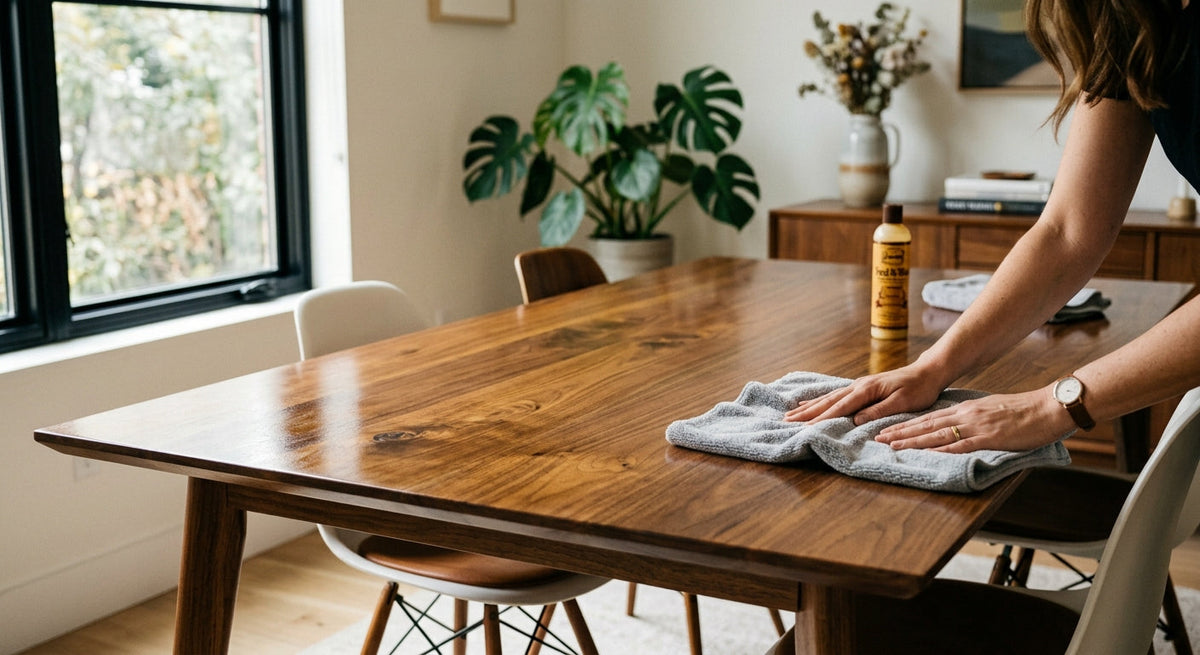
Applying polish directly to wood surfaces creates uneven blotches and oil pooling. The standard professional technique requires two separate lint-free cloths: one for application and one for buffing.
Fold your application cloth into a pad and apply a nickel-sized amount of furniture polish directly to the cloth—never directly onto the wood. Work the polish into the wood using soft, circular motions to fill fine scratches, then smooth it out in long passes following the direction of the grain.
6. Allow Penetration and Buff to a High Sheen
Once the polish is applied, give the conditioning oils time to settle into the topcoat. Allow the product to rest on the surface for 5 to 10 minutes.
After resting, take your second clean, dry microfiber cloth and buff the surface firmly in the direction of the wood grain. Buffing removes excess oil, prevents a sticky residue, and converts the matte surface into a rich, lustrous sheen.
7. Match Polishing Protocols to Furniture Categories
High-use dining tables, office desks, and accent seating face different wear patterns. Tailoring your polishing frequency and technique preserves piece integrity:
|
Furniture Category |
Primary Wear Stress |
Polishing Frequency |
Surface Focus & Recommended Items |
|
Dining & Coffee Tables |
Water rings, plate heat, food oils |
Every 1 to 2 months |
Tabletop surfaces and edge rims from our Coffee Tables Collection |
|
Desks & Workspace |
Laptop friction, paper wear, skin contact |
Every 2 to 3 months |
Main desktop surfaces and front drawer faces |
|
Accent & Dining Seating |
Hand contact on armrests & legs |
Every 3 to 4 months |
Wooden legs and frame arms on pieces from our Accent Chairs Collection |
8. Treat Fine Micro-Scratches and Dull Spots

Over time, daily usage leaves fine spiderweb scratches in clear wood finishes. Polishing acts as a natural filler for minor imperfections without requiring full sanding or refinishing.
For light scratches, choose a cream polish tinted to match your wood species (e.g., walnut, cherry, or oak). Rub the tinted polish directly into the scratch using small circular strokes. The oil pigments fill the exposed scratch groove, restoring uniform color and light reflection across the entire tabletop.
9. Establish Long-Term Environmental Protection
Polishing maintains the topcoat, but controlling the ambient environment prevents the wood underneath from drying out or warping:
-
Maintain Controlled Humidity: Keep indoor relative humidity between 35% and 50% to prevent wood joinery from swelling or cracking.
-
Block Direct Sunlight: Use sheer window coverings to screen harsh UV rays, which fade wood stain pigments and degrade polish oils.
-
Use Protective Barriers: Always place felt pads under decorative items, trivets under hot pans, and coasters under cold beverages.
Frequently Asked Questions
What is the best product to polish wood furniture with?
The best product is a high-quality cream polish or natural beeswax emulsion free of silicone, alcohol, and synthetic solvents. These products nourish the finish without creating a sticky, dust-attracting buildup.
How often should you polish wood furniture?
Polish wood furniture every 1 to 3 months depending on usage. High-use dining tables benefit from bi-monthly polishing, while accent chairs, credenzas, and bedroom dressers only require polishing 3 to 4 times a year.
What is the difference between wood cleaner, wood polish, and wood wax?
Wood cleaner removes dirt and surface grease; wood polish restores shine and fills minor micro-scratches; wood wax creates a hard, long-lasting protective barrier against water and friction.
Why does my wood furniture feel sticky after polishing?
Sticky furniture occurs when excess polish is applied directly to the wood or when product is not thoroughly buffed off. Over-application or using silicone-based sprays also traps dirt and creates a tacky residue.
Can you use olive oil and lemon juice to polish wood furniture?
No, you should avoid olive oil and lemon juice. Olive oil does not dry, causing it to turn rancid, emit odors, and attract dust, while acidic lemon juice can dull and break down protective topcoats over time.