

Putting your furniture into a storage unit can feel like a gamble. Whether you are remodeling your home, downsizing, or storing high-end mid-century modern pieces like your Leisuremod collection for a temporary move, a storage unit shouldn’t be a graveyard for your investments.
When dealing with premium furniture—which often features a delicate mix of molded plastics, polished chrome, fiberglass, rich velvets, or genuine leather—you cannot simply stack it in a locker and hope for the best. Without the proper precautions, humidity, dust, and improper weight distribution can warp frames, rust metal legs, and ruin fabrics permanently.
As furniture experts, we’ve compiled the ultimate masterclass on how to prepare, protect, and arrange your furniture in a storage unit so that it emerges looking exactly as it did the day you put it in.
1. The Ultimate Golden Rule: Choose Climate Control
Before we talk about wrapping a single chair, we must talk about the environment. If you are storing heirloom-quality or designer furniture, a standard, drive-up, non-climate-controlled storage unit is out of the question.
Standard units experience massive temperature swings and humidity fluctuations.
-
High Humidity: Causes wood to expand, mold to grow on fabrics, and metal components (like chrome wire chairs or steel bases) to oxidize and rust.
-
Extreme Dry Heat: Causes wood to crack, leather to dry out and split, and certain plastics to become brittle.
A climate-controlled unit maintains a steady temperature (typically between 55°F and 85°F) and keeps humidity levels below 50%. This mimics a stable indoor home environment, preserving the structural integrity of acrylics, polymers, and wood veneers alike.
2. Preparation: Clean and Dry Thoroughly
Never put a dirty piece of furniture into storage. Even if a stain isn't highly visible, microscopic food particles, body oils, and dust will attract pests and breed mold over time in an enclosed space.
For Plastics, Acrylics, and Fiberglass (Common in Leisuremod Designs):
-
Wipe down surfaces with a soft microfiber cloth and a mild mixture of warm water and dish soap.
-
Avoid harsh chemical cleaners, which can strip the glossy finish or leave a cloudy residue on clear acrylic surfaces.
-
Crucial Step: Let the pieces air dry completely for at least 24 hours. Placing plastic wrapped over even a droplet of trapped moisture will cause cloudy water spots or mildew.
For Fabrics, Velvets, and Bouclé:
-
Vacuum the upholstery thoroughly using an upholstery attachment to remove all dust, hair, and crumbs from the crevices.
-
If spot cleaning is necessary, use a manufacturer-approved cleaner and ensure the fabric is 100% dry before transport.
3. Disassemble Wherever Possible
It might seem easier to load a dining table or a sectional sofa fully intact, but disassembly is your secret weapon for both space-saving and structural safety.
-
Remove the Legs: Take the legs off dining tables, coffee tables, and chairs if their design permits. Storing a table flat against a wall saves an immense amount of room, and it prevents the joints from being stressed under accidental weight shifts.
-
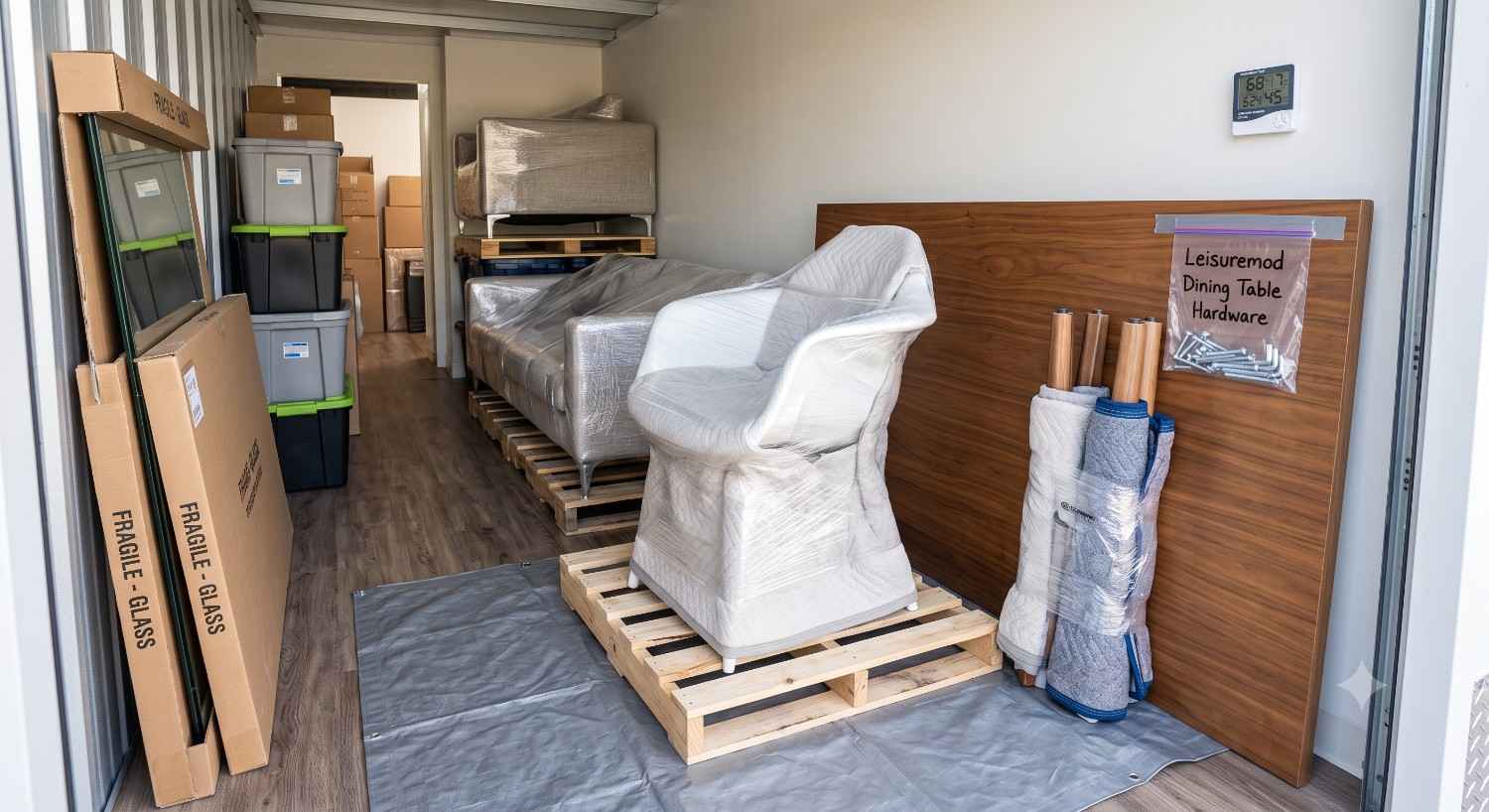
Keep Hardware Organized: Never just throw screws and bolts into the bottom of a box. Place all hardware, Allen wrenches, and washers into a clear, zip-top plastic bag. Label the bag clearly with a permanent marker (e.g., "Leisuremod Dining Table Hardware"), and securely tape that bag to the underside of the furniture piece it belongs to.
4. Wrapping and Protection: Materials Matter
When wrapping furniture, your goal is to protect it from dust and scratches while still letting the materials "breathe."
The Danger of Plastic Wrap (Shrink Wrap)
A common amateur mistake is wrapping wood, leather, or fabric furniture completely in thick plastic stretch wrap. Never apply plastic wrap directly to wood or natural fabrics. Plastic traps ambient moisture. If the temperature shifts slightly, that moisture condenses onto the furniture, causing warped wood, ruined finishes, and a breeding ground for mold.
The Professional Wrapping Protocol
To wrap your premium furniture properly, always start with a breathable base layer. Cover the entire piece securely with clean moving blankets, specialized textile pads, or old 100% cotton bedsheets. Once the furniture is entirely covered by this fabric barrier, you can then apply packing tape or plastic stretch wrap over the blankets to lock them firmly in place. This ensures that the harsh plastic outer shell never makes direct contact with the actual finish of your furniture, giving you the ultimate protection against both impact scratches and trapped condensation.
Note on Acrylic/Molded Chairs: For molded plastic or clear acrylic chairs, wrap them carefully in soft bubble wrap or foam sheets to prevent micro-scratches on the glossy shells during transit.
5. Strategic Loading: How to Arrange Your Unit Like a Pro
How you pack the storage unit determines whether your furniture survives a long stay. Think of your unit like a 3D puzzle, prioritizing structural safety over cramming things tightly.
Never Place Furniture Directly on the Concrete Floor
Concrete floors inherently absorb moisture from the earth and breathe it upwards. Lay down a thick plastic tarp on the storage unit floor first. Better yet, lay down wooden pallets or a layer of thick corrugated cardboard boxes to keep your precious chairs and sofas elevated a few inches off the ground.
Watch Your Weight Distribution
-
Don't Stack Heavy Items on Soft Seating: Never stack heavy plastic bins or boxes on top of a fabric sofa or a cushioned lounge chair. Over time, that constant weight will permanently deform the high-density foam, snap internal springs, or stretch out the upholstery.
-
Store Couches Horizontally: While flipping a couch vertically on its end saves immense floor space, it places incredible, unnatural structural stress on the armrest and frame. Keep sofas flat on their legs or elevated on pallets.
-
Mirrors and Glass: Store glass tabletops and large mirrors vertically on their edges. Never lay a pane of glass flat, as a small amount of downward pressure from something falling can shatter it instantly. Wrap glass in specialized mirror boxes or encase it between thick moving blankets.
Leave Air Gaps
Leave a few inches of space between your furniture and the storage unit walls. This promotes healthy airflow throughout the unit and prevents condensation from building up against the cold exterior walls. Create a small, clear walkway down the center of your unit so you can easily access items in the back without having to move everything out.
Ready to Elevate Your Space?
When done correctly, storing your furniture ensures that your favorite pieces remain timeless design staples for years to come. Taking these extra steps preserves the crisp lines, vibrant colors, and structural mastery of your collection.
If you're in the middle of a transition and looking to refresh your home layout with new, durable accent pieces, we are here to inspire you.