

Whether you are styling a compact downtown apartment or refreshing a spacious family living room, mirrors are among the most versatile tools in modern interior styling. Far beyond a functional glass panel to check your outfit, a well-placed decorative mirror acts as a secondary window, an architectural statement, and a light amplifier.
Interior designers frequently rely on optical illusions to manipulate spatial perception. When chosen thoughtfully and positioned with intent, mirrors solve classic spatial challenges: tight hallways feel open, dim dining areas come alive, and living rooms gain depth and balance.
In this practical guide, we break down designer-approved techniques on how to decorate with mirrors, avoid common placement pitfalls, and pair reflective surfaces with key furniture pieces for maximum visual impact.
Why Mirrors Are Essential in Modern Interior Decor
Before jumping into room-by-room placement, understanding how glass and light interact within an interior layout helps you make smarter styling choices:
-
Amplifying Natural and Ambient Light: Placing reflective glass adjacent to or opposite a natural light source catches daylight and bounces it deep into darker corners of the room.
-
Creating Instant Depth and Dimension: In compact floor plans, mirrors trick the eye by reflecting sightlines, making walls appear visually further back than they actually are.
-
Establishing Clear Focal Points: An oversized arch mirror, ornate vintage frame, or sleek geometric glass can anchor a room just as effectively as a high-end canvas painting.
-
Enhancing Architectural Balance: In rooms with asymmetrical layouts, off-center windows, or awkward structural columns, paired mirrors restore visual equilibrium.
Strategic Mirror Placement: Room-by-Room Guide
Every room serves a distinct function, and your mirror placement should complement that specific lifestyle flow.
1. Living Room: Expanding Space & Framing Seating Areas
In the living room, your primary objective is creating warmth, conversation flow, and openness.
-
Above the Sofa: Hang a large horizontal or rectangular mirror roughly 6 to 8 inches above your sofa backrest. This broadens the wall width and balances low-profile seating. Pairing this setup with comfortable, clean-lined seating from a modern luxury sofa collection creates a grounded, welcoming aesthetic.
-
Opposite Windows: Position a full-length mirror across from your main window to capture views of greenery or open sky, effectively bringing the outdoors inside.
-
Flanking the Fireplace or TV Console: Instead of placing a single mirror above a television (which causes distracting glare), place matching tall, narrow arched mirrors on either side of the entertainment unit or mantle.
2. Dining Room: Bouncing Warm Evening Light
Dining spaces naturally thrive on intimate, ambient lighting.
-
The Credenza & Sideboard Pairing: Mount a wide landscape mirror directly over your dining buffet or console table. When you host dinners, the soft glow of table candles and pendant fixtures will reflect across the glass, adding an inviting layer of warmth.
-
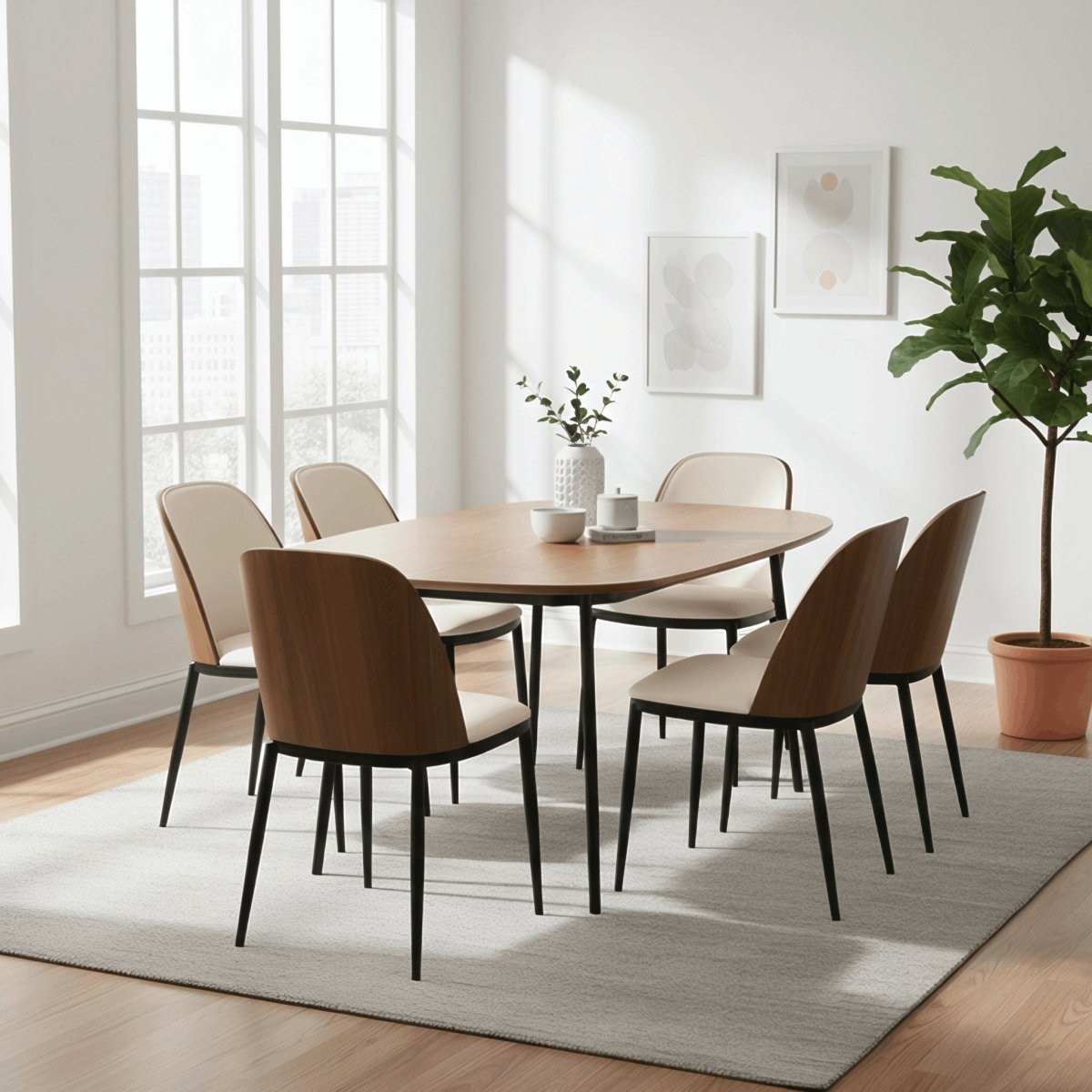
Reflecting the Dining Centerpiece: Position the mirror at a height where it reflects decorative vases, table settings, and your wooden dining room chairs, rather than the seated guests at eye level, ensuring comfortable dining without self-consciousness.
3. Entryway & Hallway: Maximizing Narrow Passageways
Foyers and hallways set the first impression of your home but frequently suffer from low light and tight footprints.
-
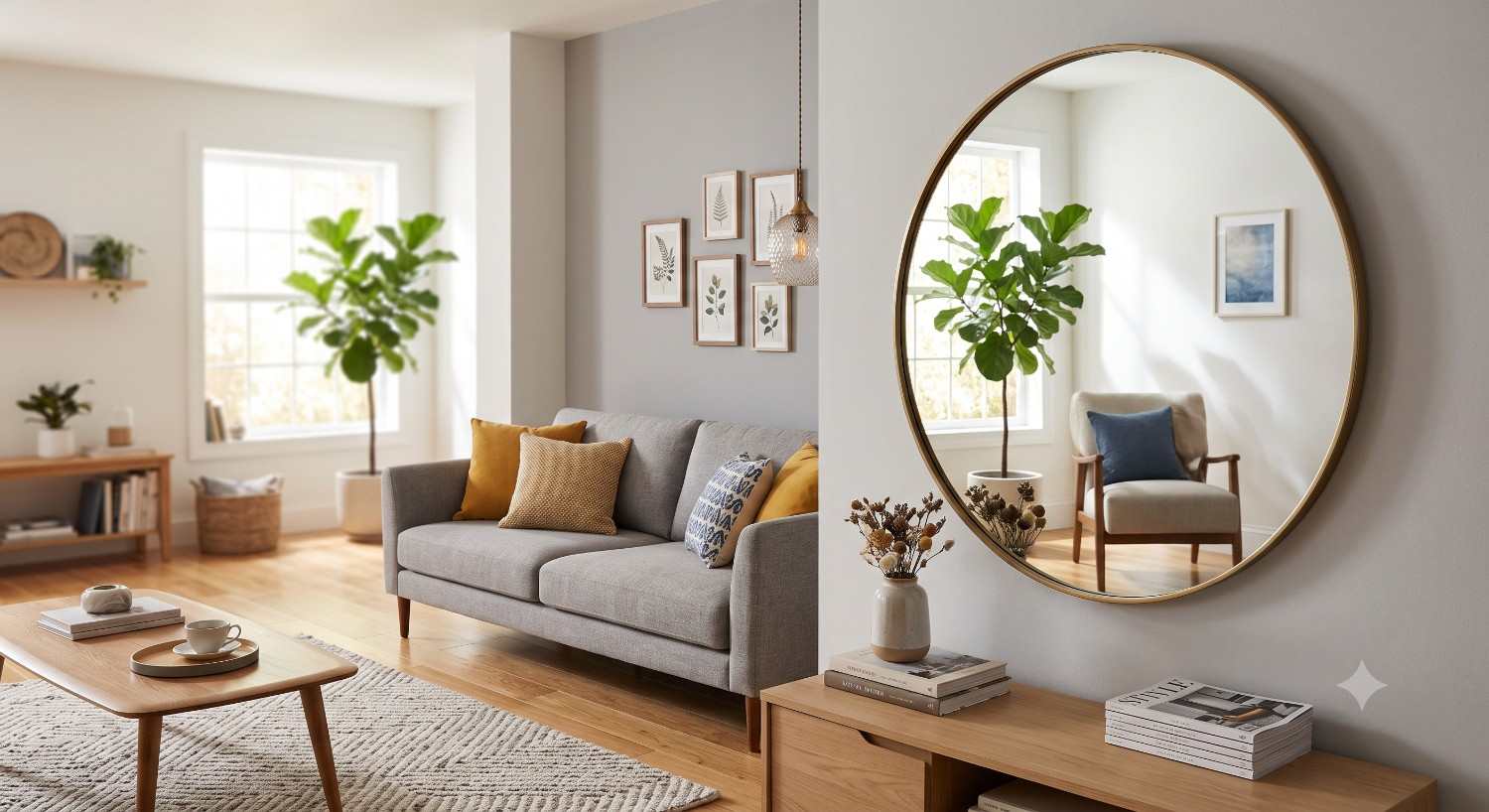
Console Table Anchor: Center a round or pill-shaped mirror above a slim entryway console. It brightens the narrow entry while offering a quick spot for touch-ups before stepping out.
-
End-of-Hallway Trick: Avoid placing a mirror directly at the dead-end of a dark hallway, as this can feel startling. Instead, hang a mirror along the longest side wall to visually widen the narrow corridor.
4. Bedroom: Softening Angles & Adding Functionality
Bedroom styling requires a balance between soft relaxation and practical dressing convenience.
-
Floor-Standing Leaning Mirrors: A full-length, heavy-framed mirror leaning securely in a corner adds relaxed luxury.
-
Beside the Bed (Nightstand Accents): For smaller master bedrooms, hang two vertical mirrors behind each nightstand. This introduces vertical symmetry and reflects ambient lamp glow across the bedding.
5 Practical Design Rules When Styling with Mirrors
To achieve an effortless, professional finish, keep these core design principles in mind:
-
Watch What You Reflect (The "View Test"): Always stand back and examine the reflection before drilling holes. Ensure the mirror captures attractive design elements—like artwork, greenery, or an open room—not a messy workstation, storage closet, or harsh spotlight.
-
Mind the Hanging Height (57–60 Inch Rule): The center of a standalone art or accent mirror should generally hang at average eye level, roughly 57 to 60 inches from the finished floor.
-
Scale and Proportion Matter: A tiny mirror on an expansive bare wall looks lost and disjointed. If the wall is wide, choose an oversized frame or cluster a gallery set of three mirrors to create intentional visual weight.
-
Choose the Right Frame Finish:
-
Thin Black Metal: Crisp, industrial, and minimalist.
-
Brushed Brass or Warm Gold: Adds warmth and luxury to neutral palettes.
-
Natural Timber/Walnut: Complements Scandinavian, organic modern, and transitional spaces. Incorporating handcrafted timber frames alongside custom woodwork in interior design brings natural texture, rich grain, and architectural depth to plain drywall.
-
Frameless / Beveled: Delivers an ultra-clean, contemporary aesthetic.
-
-
Secure Heavy Mirrors Safely: Leaning or large hanging mirrors must always be anchored into wall studs using heavy-duty D-rings and wall anchors. Never rely solely on single drywall nails.
Mirror Styles & Spatial Effects Comparison
| Mirror Style & Shape | Best Suited Rooms | Primary Design Benefit | Recommended Companion Furniture |
| Large Round Mirror (30"–40") | Entryway, Powder Room, Above Fireplace | Softens rigid, boxy room architecture | Slim console tables, low accent tables |
| Full-Length Arch Mirror | Bedroom, Living Room Corner, Walk-in Closet | Creates vertical height and soft architectural interest | Single accent armchairs, floor lamps |
| Wide Rectangular / Landscape | Above Living Room Sofa, Dining Buffets | Widens horizontal sightlines across narrow walls | Multi-seat sofas, long dining tables |
| Multi-Panel Windowpane Grid | Family Room, Modern Farmhouse, Sunroom | Mimics an extra outdoor window; maximizes light | Natural wood credenzas, fabric sectionals |
| Geometric / Asymmetrical | Hallways, Modern Study, Feature Gallery Walls | Acts as standalone modern art | Minimalist desks, floating shelving |
Common Mirror Mistakes to Avoid
Even with the best intentions, improper mirror placement can detract from an interior design scheme:
-
Over-Mirroring a Single Room: More than two large mirrors in an average-sized room can produce an unintended "hall of mirrors" funhouse effect. Use reflective surfaces as intentional accents rather than wall coverings.
-
Ignoring Glare from Direct Sunlight: Placing glass directly opposite harsh south-facing afternoon sun creates intense glare and uncomfortable heat reflections. Position the mirror at a slight angle or adjacent to the window instead.
-
Hanging Too High: Mounting a mirror near the ceiling detaches it from the furniture underneath, breaking the room's visual cohesion. Keep anchors 6 to 10 inches above furniture surfaces.
-
Underestimating Weight and Wall Type: Heavy floor-standing arch mirrors need rear safety wall-brackets, especially in homes with active pets or small children.
Frequently Asked Questions
1> What is the 2/3 rule for hanging mirrors over furniture?
The 2/3 rule states that a mirror should span roughly 60% to 75% (two-thirds to three-quarters) of the total width of the furniture piece directly beneath it.
-
Why it matters: If a mirror is narrower than 60%, it appears visually undersized and disconnected; if it exceeds 80% or is wider than the console or sofa, the arrangement looks top-heavy.
-
Vertical Gap: Always leave 6 to 8 inches (15–20 cm) of space between the top of your sofa or console table and the bottom of the mirror frame for balanced visual breathing room.
2> Where should you position a mirror in a small living room to maximize light?
To maximize natural light and perceived depth in a small living room, place a mirror directly opposite or at a 90-degree adjacent angle to the main window.
-
Light Amplification: Reflecting the window doubles daylight reach and creates the illusion of an extra outdoor view.
-
Corner Placement: Positioning a full-length leaning arch mirror in a dark corner bounces ambient room light into neglected shadows.
-
Avoid Reflection Glare: Avoid facing a mirror into direct, harsh south-facing afternoon sunlight to prevent intense heat reflection and eye strain.
3> At what exact height should an interior wall mirror be hung?
The standard interior design rule is to hang the center point of any standalone wall mirror at eye level, which is 57 to 60 inches (145–152 cm) from the finished floor.
-
Above Mantels & Buffets: When hanging above architectural features or dining sideboards, position the bottom edge 4 to 8 inches above the surface rather than following the standard 57-inch centerline.
-
Full-Length Mirrors: The top of a standing or hanging full-body mirror should reach at least 65 to 72 inches from the floor to capture a full reflection without distortion.
4> How do you secure heavy leaning or hanging mirrors safely on drywall?
Heavy mirrors exceeding 20 lbs (9 kg) must always be anchored into wooden wall studs or hung using rated heavy-duty drywall anchors (such as toggle bolts or strap toggles), never single drywall nails.
-
Mounting Hardware: Use heavy-duty D-rings paired with high-tensile picture wire or French cleats for flush, rattle-free mounting.
-
Safety Anchoring for Leaning Mirrors: Always fasten the top of leaning floor mirrors to the wall using discreet anti-tip wall brackets, especially in homes with children or pets.
5> Can mirrors make a dark room without windows feel brighter?
Yes, mirrors brighten windowless spaces when placed directly behind or adjacent to artificial light fixtures, such as table lamps, floor lamps, or wall sconces.
-
Reflected Lumens: The glass doubles the luminaire’s output and diffuses soft ambient light across the room.
-
Warm Lighting Pairing: Use 2700K–3000K warm-white LED bulbs in the reflected fixtures to prevent the glass from casting cold, sterile reflections.
Final Thoughts: Designing with Light and Intention
Decorating with mirrors is one of the fastest, most effective ways to transform the mood, scale, and lighting of any living space. By pairing the right frame profile, shape, and height with your existing furniture layout, you can easily turn tight corners into bright, inviting statements.