

When homeowners search for timeless indoor aesthetics or durable outdoor seating, one question consistently comes up: what is wicker furniture?
Despite common misconceptions, wicker is not an organic wood species or a synthetic raw fiber. Wicker refers specifically to the ancient weaving method used to assemble rigid frames into functional chairs, tables, sofas, and decor.
Whether upgrading an indoor sunroom, designing a backyard retreat, or choosing between natural and synthetic options, this guide breaks down wicker manufacturing, raw materials, real-world longevity, and maintenance practices.
What is Wicker Furniture?
Wicker furniture is any furniture item produced through an over-and-under weaving process rather than solid plank carpentry. The craft involves plaiting pliable organic strands (such as natural rattan, willow, reed, and bamboo) or high-grade synthetic polymers (such as High-Density Polyethylene) over an interior structural skeleton made of hardwood, cane poles, or powder-coated aluminum.
The English word wicker originates from the Scandinavian root vika (meaning to bend or fold) and vikker (willow). While historical specimens date back more than 5,000 years to ancient Egyptian civilization, modern manufacturing separates wicker into two distinct classes: organic indoor wicker and all-weather synthetic exterior wicker.
What is Wicker Furniture Made Of? (Natural vs. Synthetic Breakdown)
A common point of confusion is what is wicker furniture made from, as raw components vary significantly depending on whether a piece is intended for climate-controlled interiors or open-air patios.
1. Organic Plant Fibers (Indoor Applications Only)
Natural wicker furniture relies on tropical vines and flexible reed fibers:
-
Natural Rattan Core & Peel: Harvested from solid-timber climbing palms native to Southeast Asia (predominantly Indonesia). The bark is stripped into flat binding cane, while the fibrous inner pith is spun into flexible round strands.
-
Cane: Derived exclusively from the non-porous outer skin of the rattan vine, renowned for natural sheen and high tensile strength in seat weaving.
-
Willow & Reed: Common across Europe and North America, willow branches provide flexibility for traditional basket-style seating.
-
Bamboo: Hollow-stemmed grass utilized for vertical ribbing and structural bracing.
2. Synthetic Resin Polymers (Outdoor & All-Weather Applications)
Because natural fibers absorb moisture and succumb to mildew, outdoor wicker relies on synthetic extrusion:
-
High-Density Polyethylene (HDPE) Resin: The commercial gold standard. HDPE is infused with UV-inhibitors throughout the entire strand (through-body color), preventing fading, cracking, and chalking even under intense sun exposure.
-
Polyvinyl Chloride (PVC) & Polyethylene (PE): Budget-tier plastics. PVC wicker is often coated only on the surface, which leads to brittleness and peeling after 1–2 seasons of thermal expansion.
-
Structural Sub-Frames: Exterior wicker strands are woven over 1.5mm–2.0mm powder-coated aluminum framing or galvanized steel to guarantee stability without rust degradation.
Wicker vs. Rattan: What Is the Difference?
The terms rattan and wicker are frequently conflated by retailers. The critical distinction: Rattan is the raw material; wicker is the construction technique.
| Structural Property | Natural Wicker (Indoor) | All-Weather Synthetic Wicker (Outdoor) | Solid Rattan Pole Furniture |
| Primary Material | Rattan core, willow, reed, cane | High-Density Polyethylene (HDPE) | Solid tropical vine poles (Calamus) |
| Manufacturing Process | Hand-woven over wooden/cane frames | Hand-woven over aluminum frames | Steam-bent thick structural poles |
| Moisture Resistance | Poor (absorbs moisture, rots) | Excellent (100% waterproof) | Low to moderate (indoor only) |
| UV Resistance | Fades and dries out in direct sun | Resists fading up to 3,000+ UV hours | Requires UV-filtering topcoat |
| Maintenance Need | Dusting, vacuuming, paste wax | Hose wash, mild soap & water | Wood polish, furniture oil |
| Typical Lifespan | 15–25+ years (indoors) | 10–15+ years (all-weather) | 20–30+ years (indoors) |
| Best Placement | Living rooms, bedrooms, sunrooms | Patios, decks, open verandas | Enclosed sunrooms, mid-century lounges |
Key Benefits of Incorporating Wicker Furniture into Modern Homes
1. Visual Texture and Tactile Warmth
Modern interior design frequently leans on flat drywall, smooth leather, and polished metals. Wicker breaks visual monotony by introducing an artisanal, plaited texture that complements Scandinavian, Coastal, Bohemian, and Japandi architectural palettes.
2. High Strength-to-Weight Ratio
Because the structural load is distributed across hundreds of intertwined woven strands, wicker chairs provide ergonomic support without dense weight. This makes rearranging living rooms or storing patio furniture quick and manageable.
3. Breathability and Thermal Comfort
In tropical and warm environments, solid seating traps radiant body heat. Wicker’s open-aperture weave encourages continuous airflow, keeping seating cool during peak summer months.
How to Clean and Care for Wicker Furniture (Indoor & Outdoor)
Preserving the structural integrity of your woven pieces requires maintenance tailored to the material type:
Indoor Natural Wicker Care:
-
Dust Extraction: Vacuum woven crevices bi-weekly using a soft brush attachment to prevent particulate buildup between tight strands.
-
Moisture Control: Wipe down spills immediately using a well-wrung microfiber towel dampened with warm water and neutral Castile soap. Never hose down natural wicker.
-
Hydration: Apply a thin layer of boiled linseed oil once every 18 months to prevent natural vine fibers from drying out in air-conditioned spaces.
Outdoor All-Weather Wicker Care:
-
Debris Removal: Rinse outdoor sectionals monthly using a garden hose with a low-pressure spray nozzle. Avoid high-pressure washers, which can shear polymer cords.
-
Surface Cleaning: Dissolve 1/4 cup of mild dish detergent in a bucket of lukewarm water. Clean stubborn bird droppings or pollen using a soft-bristled nylon brush, then rinse clean.
-
Winterization: While HDPE can handle freezing conditions, cover sets with breathable, water-resistant polyester covers during harsh winter months to shield aluminum joints from repeated freeze-thaw expansion.
Frequently Asked Questions (FAQ)
What is wicker furniture?
Wicker furniture is furniture made through a specialized weaving technique rather than solid wood joinery. It involves interlacing flexible plant fibers (like rattan and reed) or synthetic resin strands over a rigid internal frame.
What is wicker furniture made of?
-
Indoor Wicker: Made from organic plant materials such as natural rattan core, cane peel, bamboo, reed, or willow.
-
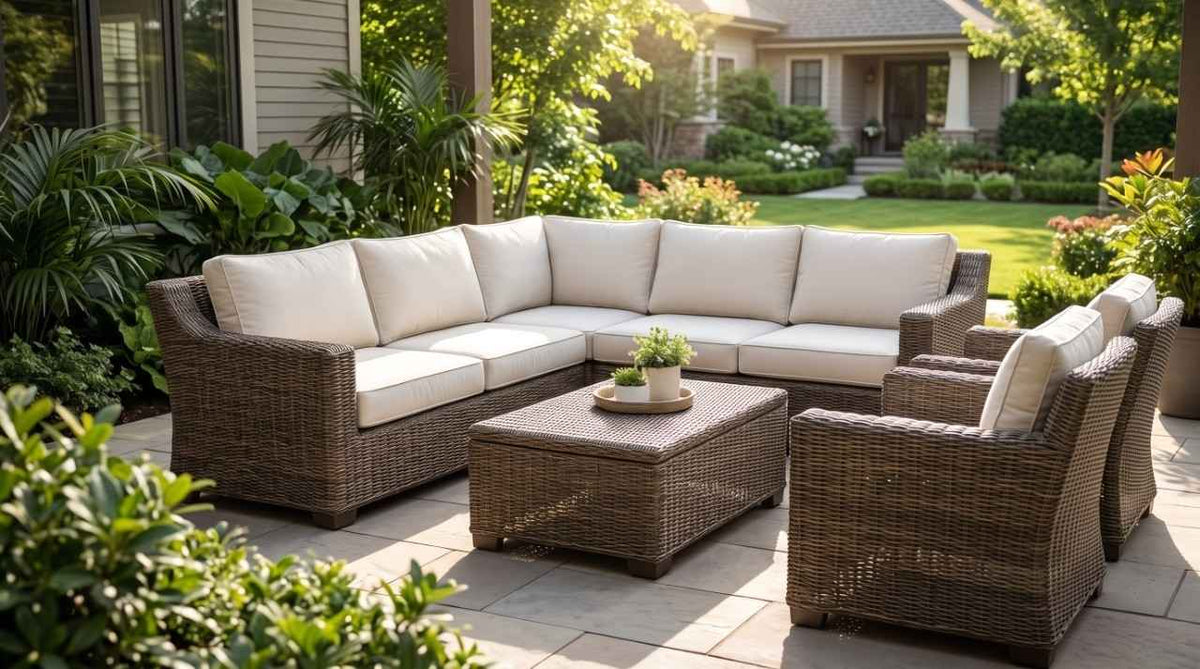
Outdoor Wicker: Made from synthetic polymers—primarily High-Density Polyethylene (HDPE) resin—woven over powder-coated aluminum frames.
What is the difference between wicker and rattan?
Rattan is a raw material (a solid tropical climbing vine), while wicker is the weaving process used to construct the furniture. Wicker can be made from rattan, but it can also be made from synthetic resin, willow, or bamboo.
Can natural wicker furniture be used outdoors?
No. Natural wicker absorbs rain and humidity, causing it to rot, warp, and develop mold. Only synthetic resin wicker (all-weather wicker) with an aluminum frame can be left outdoors.
How do I tell if wicker furniture is real or synthetic?
-
Real (Natural): Feels fibrous and warm, shows organic color variations and wood pores, and has a wood or cane sub-frame.
-
Synthetic (All-Weather): Feels smooth and plastic-like, has uniform strand coloring, and is woven over metal (usually aluminum) tubing.
How does wicker hold up in hot, sunny regions (e.g., deserts, inland heat)?
-
Choose HDPE (High-Density Polyethylene) wicker with through-body UV inhibitors.
-
Avoid cheap PVC plastic, which softens, sags, and cracks in temperatures above 40°C (104°F).
Can outdoor wicker stay outside in coastal and humid areas?
-
Yes, if synthetic: Use HDPE resin over powder-coated aluminum frames with stainless steel hardware.
-
Avoid steel frames, which will rust from airborne salt spray within 1 to 2 seasons. Keep all natural wicker strictly indoors.
How does cold winter weather affect wicker furniture?
-
Natural wicker: Must be brought inside before temperatures drop below freezing, or trapped moisture will freeze, expand, and snap the fibers.
-
Synthetic wicker: Withstands freezing temperatures down to -20°C (-4°F), but should be covered to prevent heavy snow and ice buildup from stressing the weave.