

LeisureMod Leather furniture is an investment in both comfort and style that, unlike almost any other material, has the potential to look better a decade from now than it does today. However, achieving that coveted, luxe-looking patina requires a shift from passive ownership to active care. Without a routine, high-quality leather can become stiff, lose its luster, and eventually crack.
This comprehensive guide breaks down everything from identifying your leather type to emergency stain "rescue" missions, ensuring your investment remains the centerpiece of your home.
1. Understanding Your Leather: The "Water Test"

Before you reach for a bottle of conditioner to learn how to care for leather furniture, you must understand the "anatomy" of your upholstery. Applying the wrong product to the wrong leather can lead to permanent staining.
Protected vs. Unprotected Leather
-
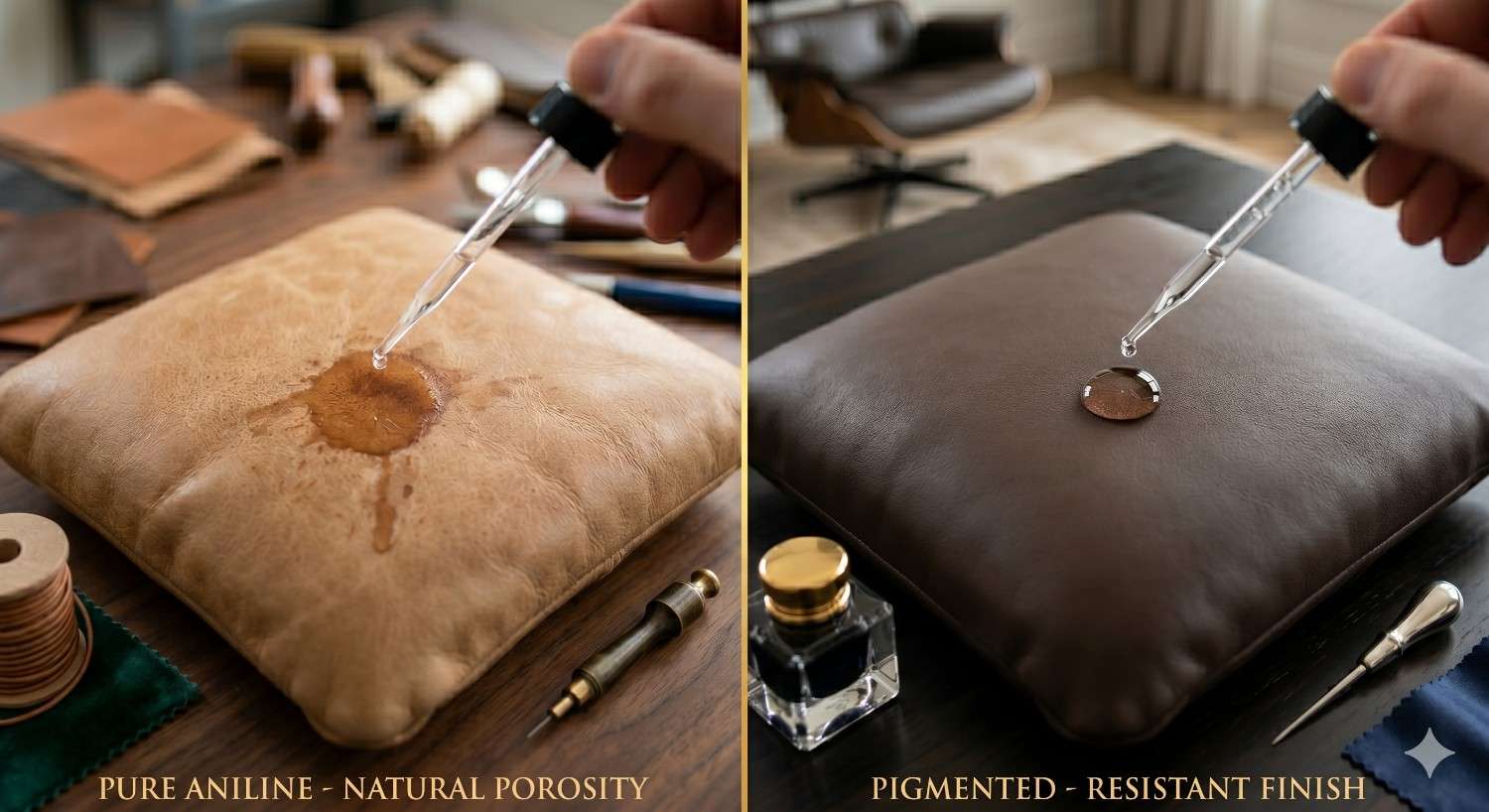
Protected (Pigmented) Leather: This is the most common type for household furniture. It features a top coating that resists spills and scratches.
-
Unprotected (Aniline) Leather: This is highly porous and luxurious but lacks a protective top layer, meaning it absorbs liquids almost instantly.
How to Perform the Water Test
To identify your leather, place a single drop of water in an inconspicuous area, such as the back or underside of a cushion.
-
If the water beads up, your leather is protected.
-
If the water soaks in and leaves a dark spot, it is unprotected aniline leather.
2. The Essential Maintenance Toolkit

Consistency is the secret to leather longevity. You should aim to condition your leather every 6 to 12 months, though high-traffic pieces like couches or furniture in direct sunlight may require attention 3 to 4 times a year.
Your Shopping List for Leather Care
-
Vacuum with Soft Brush Attachment: Essential for removing grit and pet hair from crevices without scratching the hide.
-
Soft Sponges: Professional products often recommend a sponge over a cloth for application to ensure the product is absorbed by the leather, not the fabric.
-
Clean, Dry Microfiber Cloths: Used for the final "massage" and buffing stage to remove excess residue.
-
A High-Quality Conditioner: Look for formulas like Leather CPR, which is formulated with skincare ingredients to revive upholstery without changing its original color.
3. The Professional Process: How to Care for Leather Furniture Step-by-Step

Cleaning leather is often described as one of the most gratifying household tasks because the results are immediate. Follow this workflow for a safe, deep clean.
Step 1: Preliminary Dusting
Never apply moisture to a dirty surface. Use your vacuum's soft brush or a dry cloth to clear away loose dirt and debris. If left in place, these small particles act like sandpaper against the leather fibers during the conditioning process.
Step 2: The Inconspicuous Spot Test
Even with a trusted product, always start with a small test on the back of the chair. Give it a few minutes to settle and dry to ensure you are happy with the finish.
Step 3: Strategic Application
-
Less is More: Start with a small amount of product (about a tablespoon) on the soft side of your sponge.
-
Avoid Direct Application: Never squirt the product directly onto the furniture, as this can cause uneven markings or sticky spots.
-
Circular Motions: Focus on one small area at a time, rubbing the product in with a gentle circular motion.
-
Nooks and Crannies: If your upholstery is detachable, remove it to reach the hidden seams and folds where dirt often hides.
Step 4: Absorption and Buffing
Once the product is evenly distributed, set a timer for two minutes. This allows the "thirsty" leather to soak up the moisture and plump back up. Finally, give the piece a nice massage with a clean, dry cloth to buff the surface.
4. Environmental Prevention: Beating the Elements

A major part of knowing how to care for leather furniture is placement. External factors are often the primary cause of premature aging.
-
Sunlight Management: Direct UV rays are the enemy of natural hides. If your living room gets a lot of natural light, prioritize conditioners with UV Protectants to prevent fading.
-
Heat Source Clearance: Keep leather furniture at least 12 to 18 inches away from radiators or heating vents. Forced heat strips the moisture from the leather, leading to brittleness.
-
Humidity Control: Leather is a natural material that breathes. Maintaining a consistent indoor humidity level helps keep the fibers flexible.
5. Emergency Stain Rescue

Accidents happen, but with leather, the "how" of your reaction matters more than the "when".
-
Ink Stains: Do not use hairspray or alcohol, which can damage the finish. Use a specialized leather ink remover stick immediately.
-
Grease and Oil: Blot the area with a clean cloth—do not rub. Sprinkle cornstarch on the spot and let it sit for several hours to draw the oil out.
-
Liquid Spills: Blot quickly with a dry cloth. Never use a hair dryer to speed up the process, as concentrated heat can cause the leather to shrink or crack.
6. DIY vs. Commercial: The Safety Verdict

It is tempting to use household staples like vinegar, lemon juice, or baking soda, but these are "Red Flags" for leather care. Leather has a specific pH balance; acidic or alkaline household cleaners can strip the protective top coat and permanently alter the texture of the hide.
Instead, stick to products that are explicitly formulated for leather. Natural options like Leather Honey are excellent for those avoiding harsh chemicals while still providing necessary deep conditioning for both real and faux leather.
Final Thoughts: Embracing the Patina
Learning how to care for leather furniture is the difference between a room that feels cluttered and one that feels curated. By mapping your room to avoid heat sources, performing regular conditioning, and reacting correctly to spills, you allow your furniture to develop the character that creates a luxe room design.
Grab your toolkit, start your maintenance schedule, and design your space with the confidence that your high-quality leather pieces will stay fresh, supple, and beautiful for years to come.