

Simplicity, visual calm, and intentional living—modern minimalist home decor is not about living in sterile, empty white boxes. Rooted in the philosophy of "less is more, but better," modern minimalism is an editorial practice of curating high-quality, functional essentials while stripping away visual noise.
The cold, clinical minimalism of past decades has officially been replaced by Warm Minimalism. This contemporary evolution balances clean architectural lines with tactile natural materials—raw wood grains, slubby linens, unglazed ceramics, and burnished metals—creating grounded living spaces that feel deeply inviting rather than hollow.
Whether designing a compact city apartment or refreshing an entire home, this comprehensive guide breaks down the core styling rules, room-by-room essentials, comparison frameworks, and budgeting strategies to build an authentic minimalist interior.
The 4 Core Principles of Modern Minimalist Decor
Before clearing surfaces or purchasing new furniture, ground your design decisions in these four fundamental styling frameworks:
1. The 2/3 Negative Space Rule
Minimalist design treats empty space (negative space) as an active design material. When styling a coffee table, credenza, or floating shelf, never fill the entire surface. Dedicate approximately two-thirds (60–65%) of the surface area to functional or sculptural objects, leaving the remaining one-third completely bare. This breathing room directs the eye to the craftsmanship of the pieces that remain.
2. The Material Triangle (Preventing Clinical Sterility)
A monochromatic room feels cold only when it lacks tactile variety. Every minimalist space should balance at least three distinct natural textures:
-
Organic Warmth: Light oak, walnut, or teak wood furniture.
-
Sculptural Mass: Matte ceramics, travertine, burnished concrete, or limestone.
-
Soft Light Filtration: Belgian linen drapery, washed cotton bedding, or flatweave wool rugs.
3. The 60-30-10 Tonal Color Rule
Minimalist palettes depend on tonal layering rather than high-contrast patterns:
-
60% Foundation Base: Chalky off-white, light greige, or soft linen wash applied to walls, large storage, and base flooring.
-
30% Secondary Neutral: Mid-tone stone, warm taupe, or natural wood tones across larger upholstery, area rugs, and tables.
-
10% Grounding Accent: Matte blackened iron, brushed bronze, muted terracotta, or deep olive green used selectively in lighting hardware, frames, and single vessels.
4. Concealed Over Open Storage
Visual clutter triggers subconscious mental fatigue. Modern minimalism relies on "invisible architecture"—frameless flat-panel cabinets, platform beds with integrated base drawers, and storage ottomans. Closed storage holds daily necessities, ensuring open surfaces display only curated, intentional objects.
Room-by-Room Minimalist Essentials Checklist
| Room | Foundational Anchors (Must-Have) | Curated Accents (1–2 Pieces Only) | Clutter Traps to Avoid |
| Living Room | Low-profile clean-line sofa, solid wood or stone coffee table | Large matte ceramic vase with a single branch, neutral wool/jute rug | Gallery walls with small mismatched frames, excessive printed cushions |
| Bedroom | Low platform bed frame, wall-mounted floating nightstands | Washed linen duvet set, one substantial potted plant (e.g., Ficus or Olive) | Open clothing racks, stacks of nightstand books, multi-layered throw pillows |
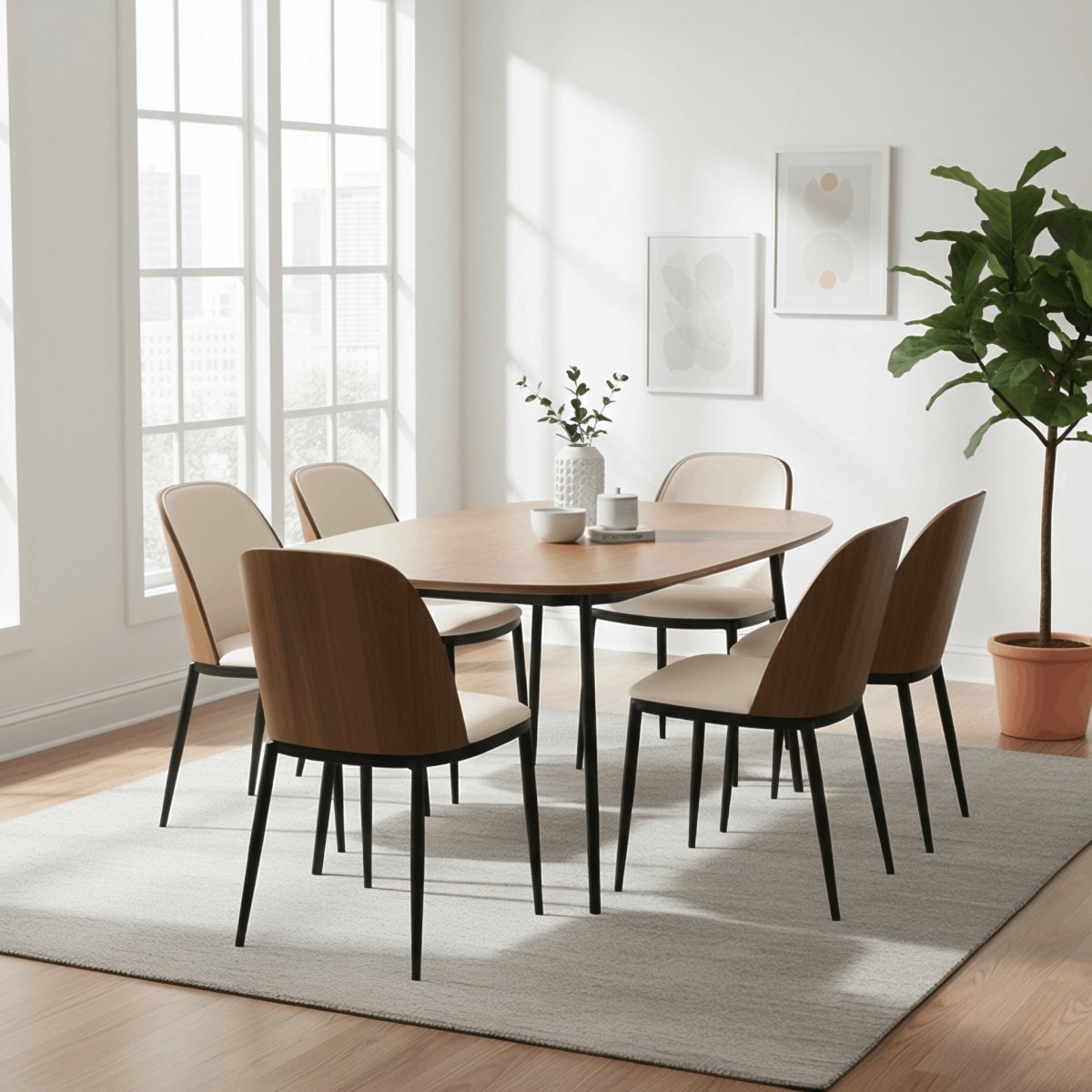
| Dining Area | Solid wood dining table with visible grain, unadorned dining chairs | Single architectural pendant light fixture, hand-thrown low ceramic fruit bowl | Synthetic table runners, crowded centerpieces, busy placemats |
| Entryway | Slim floating wall console or wooden bench, large round mirror | Shallow stone drop tray for essentials, single sculptural wall hook set | Piles of loose shoes, multi-coat overhanging racks, exposed wiring |
Room-by-Room Styling Guide
1. The Grounded Living Room
The living room serves as the social and functional core of the home. Designing it minimally requires selecting anchor pieces that command presence through proportion rather than ornate detailing.
-
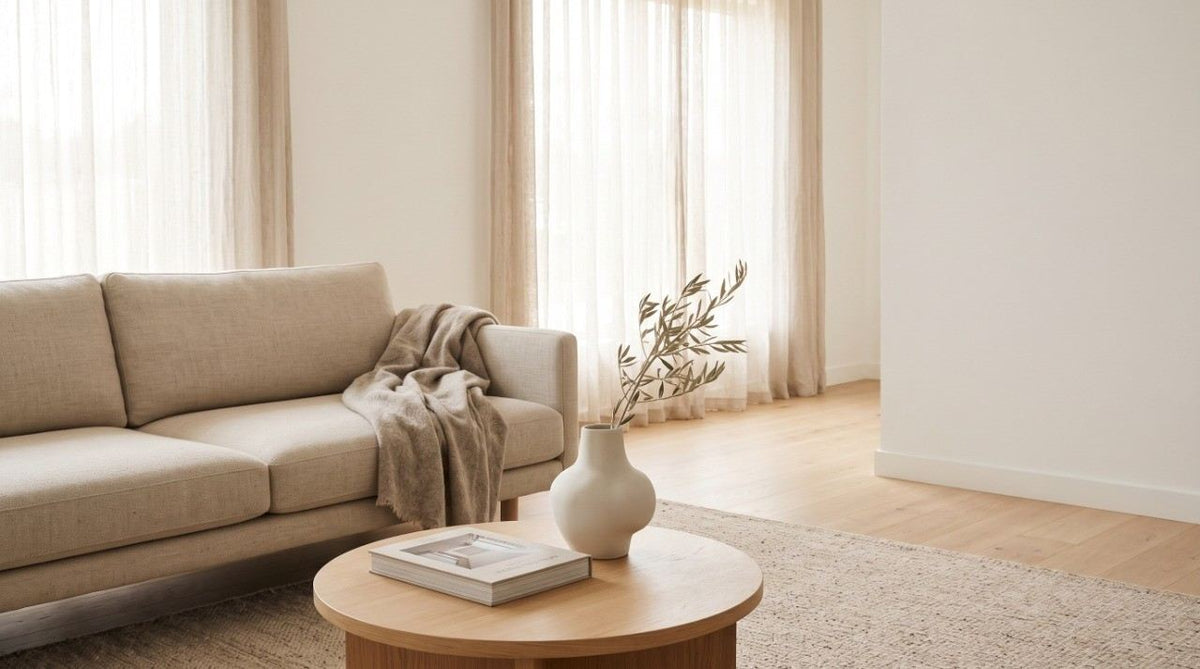
The Primary Seating: Opt for a tailored, low-profile sofa upholstered in durable, textured fabrics like performance linen, boucle, or tightly woven wool blends. Choose neutral hues—sand, pebble gray, or oatmeal. Avoid skirts and unnecessary tufting; visible sofa legs or clean platform bases maintain continuous sightlines across the floor.
-
The Coffee Table Anchor: A monolithic stone plinth or a low-slung, rounded wooden coffee table balances straight sofa lines. Keep tabletop styling strictly disciplined: one architectural art book and a single unglazed ceramic vessel or shallow stone bowl.
-
The Window Treatments: Ditch heavy, multi-layered drapes or synthetic horizontal blinds. Install ceiling-hung, ripple-fold linen sheers in a color that matches the wall paint. This softens natural sunlight without interrupting the vertical expanse of the room.
2. The Restful Bedroom Sanctuary
A minimalist bedroom prioritizes restorative sensory rest by eliminating visual noise and chaotic storage.
-
The Low-Profile Bed Frame: Platform beds in solid wood or neutral upholstery ground the room. Keep headboards simple—either a clean rectangular silhouette or an integrated wooden panel that extends behind matching nightstands.
-
Streamlined Bedside Storage: Floating, wall-mounted nightstands keep floor surfaces uninterrupted, making smaller bedrooms appear visually larger. Hide all charging cords through integrated drawer grommets. Limit the nightstand surface to a single warm-toned lamp (2700K color temperature) and a glass carafe.
-
Tactile Bedding Layers: Skip complex decorative pillow stacks. Layer an organic cotton sheet set with a pure washed linen duvet in soft, tonal hues (such as ecru paired with warm taupe). The organic drape and natural wrinkles of linen provide sophisticated texture without needing bright patterns.
3. The Mindful Dining Space
Minimalist dining areas celebrate hospitality, clean sightlines, and honest craft.
-
The Dining Table: Choose an unadorned table where the raw integrity of the material shines—whether solid white oak, walnut, or honed marble. Avoid high-gloss lacquers; matte, oiled, or honed finishes age gracefully and handle daily wear without glare.
-
Sculptural Illumination: Let lighting function as hanging art. A single, wide-brimmed paper lantern, cast brass dome, or linear architectural pendant suspended over the table eliminates the need for busy wall or table decor.
-
The Edited Tabletop: When not in use for meals, keep the table completely bare except for a single focal point: a wide, shallow stoneware bowl or a solitary branch displayed in a heavyweight vessel.
4. The Functional Entryway
An entryway establishes the baseline energy of your home. It must handle high-traffic practicalities seamlessly.
-
Slimline Consoles: For narrow corridors, select a wall-hung ledge or a two-legged console anchored to the wall.
-
Proportionate Wall Mirrors: Hang an oversized circular or softly arched metal-framed mirror above the console. Beyond its functional utility before stepping outside, a large mirror amplifies natural light and visually doubles the depth of a tight entryway.
-
The Dedicated Drop Zone: Prevent key and mail clutter by placing a single carved wooden or marble catchall tray on the console. Implement concealed shoe storage cabinets (such as drop-down shoe benches) to keep footwear completely hidden from the entrance line of sight.
Investment vs. Budget Allocation: Where to Spend and Save
A common misconception is that minimalist design requires an unattainable luxury budget. Intentional spending focuses capital on durable structural anchors while sourcing accents cost-effectively:
| Investment Priority (Spend More) | Rationale | Budget-Friendly Alternatives (Save Here) |
| Primary Sofa & Mattress | Directly impact comfort, posture, and physical longevity; cheap foam collapses within 2–3 years. | Side tables, accent stools, and dining chairs from secondary vintage markets or local carpenters. |
| Core Hardwood Dining Table | Functions as a daily workhorse and focal gathering point; solid wood can be sanded and refinished for decades. | Dining table accents: use dried garden branches, pampas stems, or budget ceramic vases. |
| Statement Overhead Lighting | Serves as the visual centerpiece and defines ambient mood; artisan fixtures elevate an entire room's perceived value. | Storage baskets, drawer inserts, and linen pillow covers sourced via affordable online retailers. |
| Custom Built-In Storage | Eliminates freestanding dresser clutter and permanently organizes odd architectural corners. | Free-standing floating shelves paired with standardized, uniform canvas storage boxes. |
4 Common Minimalist Decor Mistakes to Avoid
-
Equating Minimalism with Monochrome White: Painting all four walls stark brilliant white while choosing white furniture results in an icy, institutional space. Warm minimalism demands creamy undertones, buttery woods, and earthy mineral hues.
-
Prioritizing Aesthetics Over Ergonomics: Purchasing an unyielding sculptural chair that no one enjoys sitting on defeats the purpose of an intentional home. Form follows function; comfort is an essential requirement.
-
Purchasing Complete Decor Sets in One Day: Curated minimalist interiors cannot be bought directly out of a single catalog showroom. Rushing leads to cookie-cutter rooms. Acquire foundational anchors first, live in the space for weeks to understand natural light patterns, and add complementary accent pieces gradually.
-
Neglecting Everyday Routine Paths: If you enter the door and instinctively drop your bag on the floor because there is no designated hook, the design has failed. Build seamless functional zones around real human habits.
Frequently Asked Questions
What is the difference between classic minimalism and warm minimalism?
Classic minimalism (popularized in late 20th-century architecture) relies on stark monochrome palettes, polished metals, strict geometry, and high-gloss surfaces. Modern warm minimalism incorporates organic textures—matte stoneware, unbleached linen, light and medium-toned natural woods, and curved, imperfect silhouettes—to create comfortable, lived-in simplicity.
How do I make a minimalist room feel cozy without adding clutter?
Focus on tactile depth and ambient lighting rather than decorative knick-knacks. Use a high-pile or looped wool area rug, layer a textured waffle-weave or linen throw blanket across the sofa, and introduce multiple light layers (soft table lamps, low-glare floor lamps, and dimmed wall sconces) at eye level using warm 2700K bulbs.
How many decorative accessories should sit on a minimalist surface?
Adhere to the "rule of three" or the "single anchor rule." On an average-sized credenza or shelf, display either one substantial sculptural piece on its own (such as a large ceramic jug) or an asymmetrical cluster of three items of varying heights and materials (e.g., a tall brass candle holder, a low marble bowl, and a medium ceramic vase).
What is the "One-In, One-Out" rule in home styling?
The "One-In, One-Out" rule is an essential maintenance habit: whenever you bring a new decorative object, kitchen tool, or textile into your home, donate, sell, or discard an existing one. This prevents silent clutter creep and preserves intentional negative space over time.